Saturday, 30 July 2022

Yesnaby afternoon.

Perhaps my favourite place in Orkney is Yesnaby. It doesn't look much, and often the car park is quite full. There's an offroad motorcycle circuit, it doesn't look promising. But walk either north or south and within minutes you're away from the people and into a truly wild world, battered and controlled by the wind, the sea, the Sun.

Going south it takes a little time to clear the people, folk walk to the sea stacks. It's quickly not busy though.

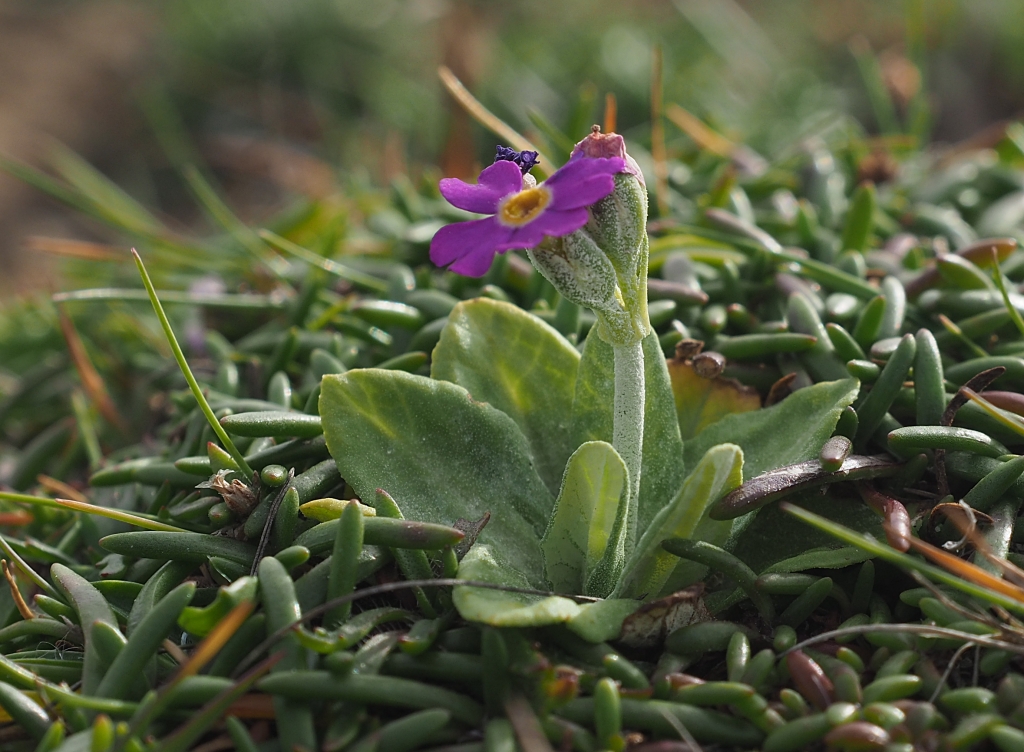
Not far to the Primula scotica, and lots of identity defying Euphrasia (I've kind of given up on these, they're too hard, it's almost impossible to be sure of the identification due to the hybrid issue, pocket barcode kit required). 

Euphrasia sp.

Common Blue.

Usually Yesnaby is good for micro moths, but the day was slow for those. I went to one of my favourite little spots and found Ancistrocerus scoticus and its parasitoid, one of the ruby-tailed wasps.


Ancistrocerus scoticus.

And not the best image of the parasitoid.

Chrysis sp (probably in the region of ignita).

I wandered on, south. Two Large Heath at their usual spot.

Large Heath.

I was intending to search for Frog Orchid. I've not seen one previously, they're tiny and I don't really know what habo they live in. There are burns that run down to the sea, I started searching around them.

First this micro, rather a good one:

Lobesia littoralis, a seaside specialist and not especially common NFM anyway.

Primula scotica way south of where I've found it before.

I was pleased with the Primula scotica, I'd not seen it in this area before.

Down on my hands and knees, not an unusual posture these days this small Diptera caught my eye.


Herina frondescentia, another NFM.

And then I realised I didn't recognise the plant it was on, I've still not managed to identify it.


Unknown.....  Bog Pimpernel, Anagallis tenella, thanks JT (NFM).

I continued along the burn, sometimes on hands and knees. I've since discovered this is not really the right habo for Frog Orchid. However, I did find this fly.


Most likely Tetanocera ferruginea, a common Sciomyzid. The larvae develop inside water snails.

Six adult Arctic Skuas were present most of the afternoon, chasing around and calling, but not a Bonxie was to be seen.


Thursday, 21 July 2022

Hols-ish.

No posts as we've been away. Partly holiday, partly offspring duties. Moving elder daughter out of her flat and attending her graduation was the main event. Somewhere in there it was my birthday too, I've officially been a pensioner for a year now, that's really a bit odd. I don't feel any older, or wiser; just a tad more knackered sometimes. (Lugging boxes and stuff up and down four flights of stairs on Sauciehall Street was an activity I try to avoid these days, unsuccessfully on this occasion.) The girls gave me a rather wonderful cake stand. One of my other activities, not previously mentioned on this blog, is baking which I enjoy munchly, and over the last year I've extended my repertoire to cakes, thus the cake stand. 


Various ID keys and Buglife T-shirts also came my way. Whilst in Glasgow we went for a couple of meals out, not something we do here very often as it's expensive and apart from a couple of places we're not served anything I can't cook myself, usually cook better at that. The standard of food and service was a revelation, in a very good way. On the way home we stayed in the noisiest hotel I've had the misfortune to attempt to sleep in, but also enjoyed a brilliant pub with excellent food and beer (6 degrees North in Stonehaven, well worth a diversion to sample).


The 365 challenge has suffered, being away from here in a key month. I'll be surprised if I can see 365 new species in the county this year, however, I may, if I widen my horizons to the whole of Scotland, still be on track. I took a light trap with me and where we stayed in The Trossachs was ideal so I recorded a good number of new moths. I'll post these on a seperate page shortly.  I'd much appreciate some checking of some of the IDs, SS, AC? I realised after a couple of days that I was making mistakes with the Beauties - Peribatodes, Hypomecis and Alcis spp - I have seen some of these in the last few years in Arran but they don't occur in Orkney and they are not especially easy.

Mottled Beauty, thanks SS and BS.

 
Mottled Beauty, again.

Anyway, I'll try and write more about the trip away on a page, indeed this page - https://literateherringthisway.blogspot.com/p/trossachs-wildlife-july-2022.html

Back at the ranch in the last few days Dunlin and Ringed Plover moving through and an excellent dark phase Arctic Skua low through the garden. The Shelduck still have their eight offspring and a Teal duck was seen with  seven small chicks.

A bit of trapping has produced this Crambus ericella pascuella (thanks BH and M which might be new.


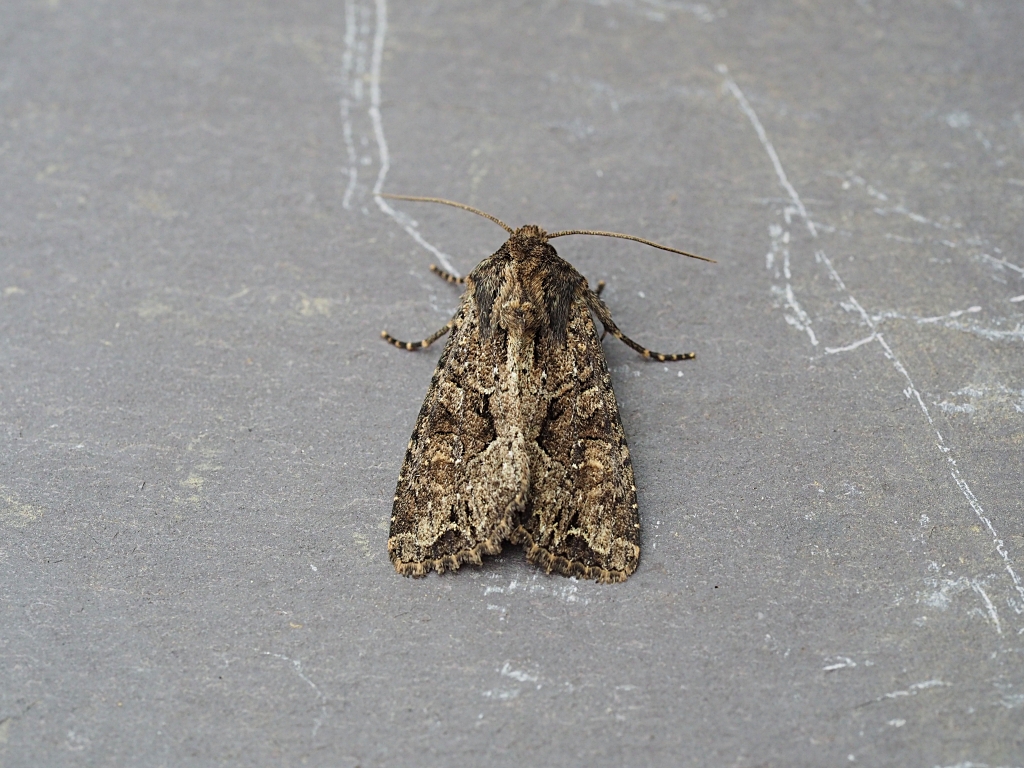
This week I also attempted a dissection, it didn't go too badly. I picked a possible candidate for Mesapamea didyma (Lesser Common Rustic) and followed the instructions in Sterling and Parsons, I'd bought the chemicals a while back. 


Teeth on the clavi proove this to be M. secalis, still a result as I'd not proven that species previously.

Male genitalia, sans aedegus, M. secalis (Common Rustic).

Sunday, 26 June 2022

Twitching a caterpillar.

Well, I was in Kirkwall anyway, trip to the tip, and getting a few supplies. NC had kindly invited me the day before when I mentioned I'd not seen Pale Brindled Beauty, I've never recorded one here, perhaps just a case of more effort required, but we don't have the range of trees and shrubs found in NC's garden. It is certainly a wacky looking larva.


Pale Brindled Beauty.

Whilst there I phtographed Mottled Umber cats as well.

Mottled Umber.

I didn't spend time hunting for hovers, although there are a few I haven't seen in the garden, a bit short on time, however, NC has very kindly invited me to return, and I might do so with a light trap as the Green Arches season is upon us, another moth I've not seen which occurs in her garden.

It's been a good week for moths with another new one, Anania fuscalis, flying in quite good numbers at Yesnaby on Monday. Yesnaby is a place to go to find day flying micros. This species has a rather vague status in Orkney, although apparently found a few times in South Ronaldsay.


Anania fuscalis.

There were plenty of Eupoecilia angustana at Yesnaby too.

Eupoecilia angustana.

And the first Large Heath of the year.

Large Heath.

The Bonxie situation at Yesnaby, where they used to be common breeders, was disappointing, no birds on territory. There were six Arctic Skuas on territory but it looked as if only one pair might have been doing much.

I had intended to botanise a bit at Yesnaby and I did take photos of a couple of sedges, not identified them yet though. However, Heath Milkwort was a plant I was previously unaware of. I know Common Milkwort, and found that, but in checking in the book realised that there was another species that I might be able to find, five minutes later, success (as long as the ID is correct, of course).

Heath Milkwort.

I also finally sussed out Sea Arrowgrass.

Sea Arrowgrass.

Yesnaby is the only place I've found Carabus arvensis in the past, I wasn't disappointed this time as one duly obliged.

Carabus arvensis.

During my wanderings I sadly found that the Short-eared Owls had lost one of their chicks. I found the body, not too far off fledging too. I'm guessing that the recent wind and rain meant they couldn't supply enough food. Happily, the adult posed nicely as I drove away up the road. I'm guessing they will have more chicks tucked away that have survived.

SEO.

There were a couple of other casualties discovered on this outing. A dead whale, or bit of it anyway, probably a Minke, floating off the geo.

And Yesnaby being a mystical place some magic had been going on, bad magic.

Who beheaded the fairy?

I've had the light traps out a bit, a few things caught. Unfortunately both my battery powered systems have failed. Looks like the inverter has packed up, and the other system is blowing fuses, the ballast has probably failed. A new inverter arrived yesterday so that ought to resolve that issue and the other system is going back to PB who'll hopefully diagnose and fix the problem, it was beyond my limited electrical skills anyway.

Thursday, I'd volunteered to help on a school trip to the beach for an ex-colleague. Give children catching implements and they'll usually turn up something of interest. Two new fish were a bit unexpected but excellent. Rock Goby and Sea Scorpion.

Rock Goby.

Sea Scorpion.

And the following day was our wedding anniversery, first time in the sea for the year and more sea creatures.


A paddleworm I think.

Lenticular clouds.


Monday, 20 June 2022

Insect Week 2022.

And it kicked off, after days of high winds, with a brief lull. Traps out, the Wee Wood being the current hot spot, and a new moth for me (I think a lifer), Marbled Coronet. Common enough but we seem not to have crossed paths previously. Eighteen moth species in the trap plus a pile of other stuff that I'm working through.  

Marbled Coronet.

A well marked Dusky Brocade.

These continue to be easy to confuse with other species, particularly The Confused, confusingly.

There were two very late Hebrew Character, a Dark Sword-grass and a very nice Grey Dagger.

Grey Dagger.

There's a bit of an issue over Grey Dagger here in Orkney as apparently there are two records, as unlikely as it may seem, of Dark Dagger. I don't know the circumstances of these records, but they don't appear to be accepted nationally, they're not on the list here - https://www.eastscotland-butterflies.org.uk/mothflighttimes.html There is a record in the NBN (and another for Scotland). Anyway, as I've found Grey Dagger cats right by where the trap was set it would seem to me safe enough to presume Grey Dagger, I'm certainly not killing it and dissecting the bits out, I think it's a still a tricky determination even doing that.

A worn Small Phoenix, I catch one or two a year.

Blastobasis lacticolella.

Care is needed with this micro, and I think in the past I've not checked carefully enough that these are not something else, this one is good.

I forgot to post the lovely Grass Rivulet that I caught the other day. Common enough across the way at Ring of Brodgar, but I rarely see them here. This one was very well marked.

Grass Rivulet.

Keeping up with my record keeping and identification is tough. I'm trying to keep a running record of finds on Flickr but I'm struggling to keep that up to date, and I'm behind with iRecord, this is like a full-time job. And I have house stuff to do, like decorating, progress with our boiler room/back kitchen is sloooooowwww.

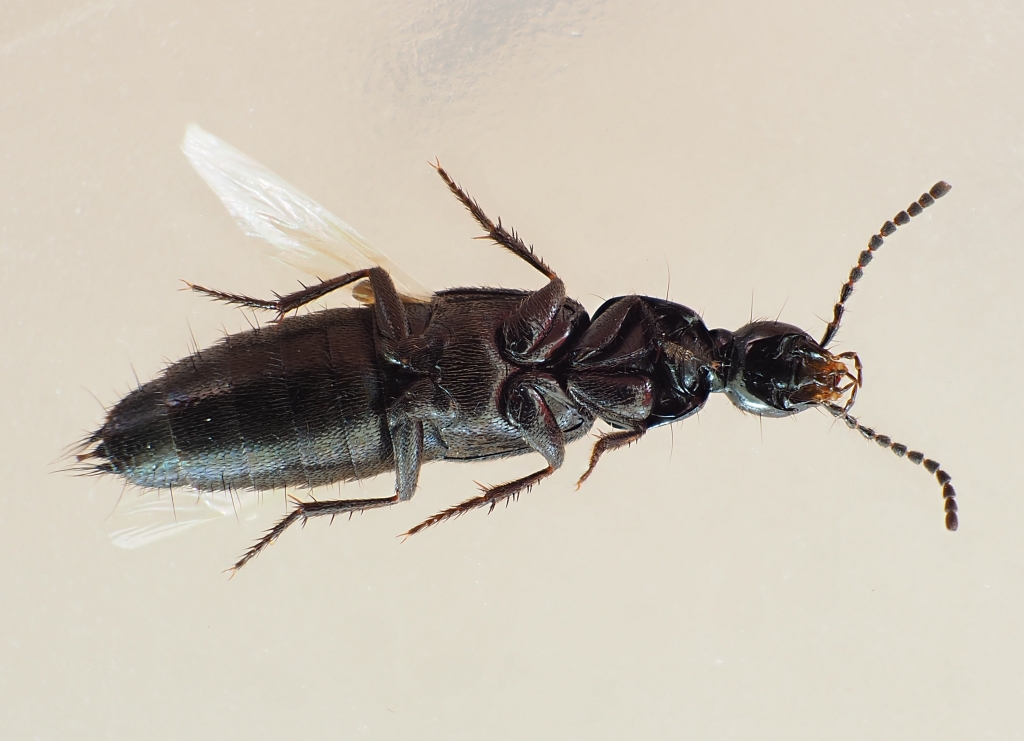
I found a nice Staphy in the pony's water the other day, it might be a second record for Scotland, unfortunately a female Philonthus, so no distinctive aedegus with which to nail the ID. I'll stick it on iRecord anyway.


Female Philonthus concinnus, I reckon. To find another, and a male to boot.

A puzzle resolved, this is a male Phryganea grandis. It looks quite different from the well marked females, and is a bit smaller too.

With these larger caddis it is possible to examine the genitalia, photograph to confirm the ID and release.

Male genitalia to confirmthe ID, Phryganea grandis.

I put a black washing up bowl out with a drop of water in it; yes, BH managed to find one in K2. A very effective beetle trap. In amongst the many Helophorus grandis were a few interesting things to work through. There was also this suicidal cranefly, perhaps it was this that had laid these egg strings.

Limonia phragmitidis.

Ah, lost the egg photos, I'll have to find them and add them later.