Thursday, 3 August 2023

RANT! (Oh, I can't be bothered, but then I could be.)

 ... but before I do I've found some nice things. Mostly hunting with the camera = non-lethal (don't rant yet...). 

I've been wandering along the Hawthorn Hedge of late with a few target species in mind, but usually finding other things. Bees, other than Honey Bee and bumblebees, are uncommon here so this tiny beast was a nice find and NFM.


Andrena coitana.

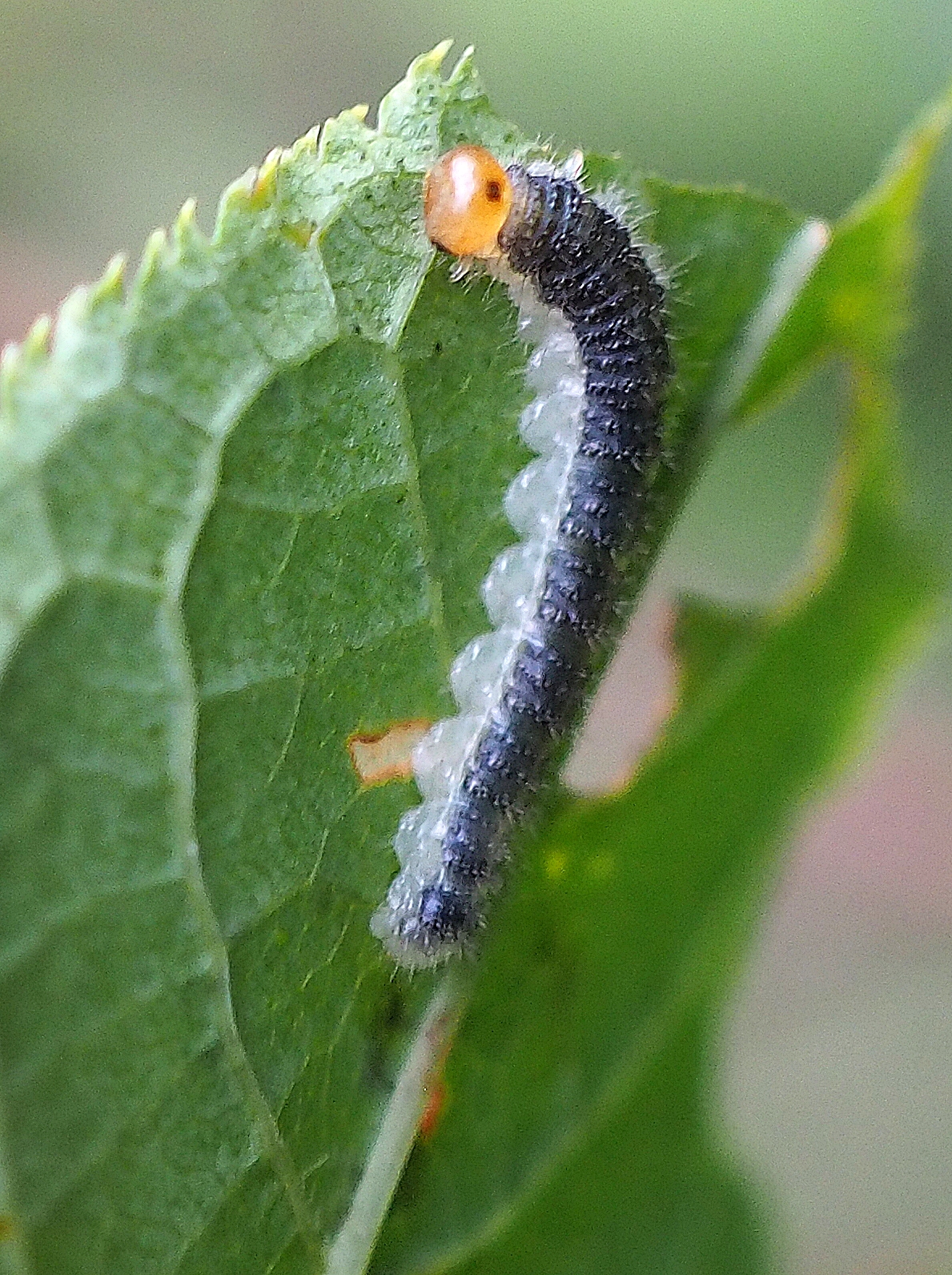
This Grey Dagger cat was nestled in a Hawthorn leaf, not the best image but it is a very smart looking cat.

Grey Dagger, photographed using 75 - 300mm lens as it was highish up and beyond a barbed wire fence.

On the way back from one of these expeditions yesterday, as the breeze was getting up, I was casually looking at all the Wild Angelica flower heads, and suddenly a hoverfly caught my eye. Finding this species is like finding Bluethroat or Barred Warbler in birder's speak.


Xanthandrus comtus a migrant. I've only seen one before, and that was in a light trap. Nice to find one like this. There have been three already this year in the county, exceptional.

There have been quite a few migrants with another wave of Yponomeuta rorrella arriving and quite a few Hummingbird Hawkmoths in the county, with which I have failed to connect despite a careful search of the local Honeysuckle hedge.

Diamond-back Moth, Plutella xylostella, another migratory species.

Just a couple of P. xylostella have appeared, one in the trap and one on the garden Tansy, which is a great insect attractant, and one of my favourite plants.

I've also been wandering about up by the wind turbine on the moor behind the house. The Wild Angelica is prolific and covered in Ichneumons, which apart from a few photos I'm mostly choosing to ignore as they take so long to identify.

Nice moorland plant diversity near the turbine.

Eristalis arbustorum.

Plateumaris discolor, a species I've only seen once before, earlier this year.

Evacanthus interruptus.

Melanostoma scalare.

Twin-spot Plume, Stenoptilia bipunctidactyla, I think I've only recorded this species once before.

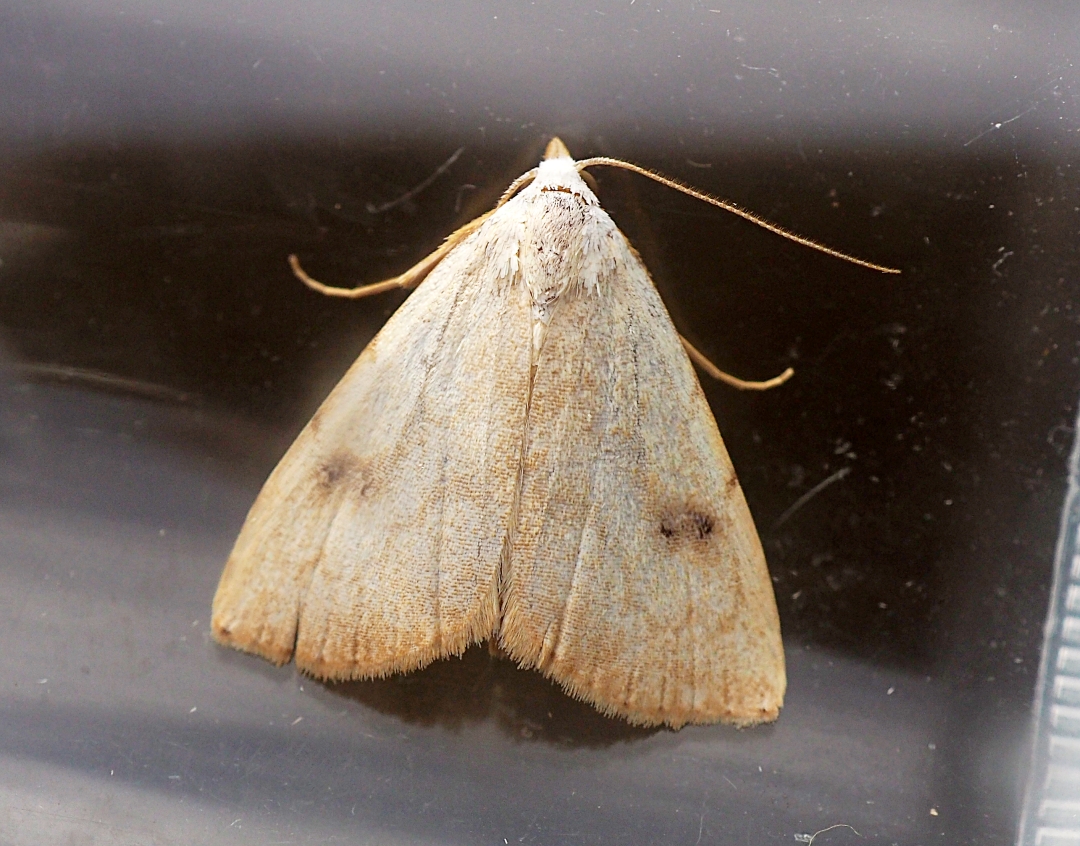
BH caught an interesting moth, a Noctuid that was very worn. There was a little debate about its identity, general opinion was that it was Dusky Brocade, it was hard to be certain. Given the specimen I did a gendet.


The dissection proved Apamea remissa, Dusky Brocade.

Re the rant; it wasn't worth ranting about. Unlike Rishi Sunak's oil and gas licenses, they are worth a rant. My opinion has always been that a particular enterprise of a Tory Government is to line their own pockets and those of their cronies. So it's no surprise to me that Infosys, the family business, has (it is reported) recently won a huge contract with BP and apparently has a partnership with "two of the top five integrated oil and gas companies, three of the top four oilfield services providers, and five of the top 10 upstream enterprises across the oil and gas landscape.” This is what Prime Minister Sunak said in his first speech as PM on 25th October 2022 - "I will unite our country, not with words, but with action. I will work day in and day out to deliver for you. This government will have integrity, professionalism and accountability at every level. Trust is earned." I leave you to draw your own conclusions. Potentially these licenses, despite the wittering on about carbon capture, as far as I'm aware an ineffective and highly questionable technology, are a further nail in the environmental stability of our planet.

No, it's uninhabitable.


Wednesday, 26 July 2023

Some moth business.

As I mentioned last post I've been re-reading and perusing Ian Lorimer's two small books. Ian was the Orkney County Moth Recorder before his death. At that point Sydney Gauld, who by all accounts began his own moth journey due to Ian, became the recorder. Sydney moved away from Orkney in the last year and unsurprisingly recently resigned as the CMR (actually the CLR as he did the butterflies as well).  There's no obvious successor to the crown, and so it will be Moth Team Orkney. A group of local moth enthusiasts have been corralled to support Helen Aiton, the new Orkney Lepidoptera Recorder. Orkney moth and butterfly records should now be sent to orkneylep@outlook.com - please request a recording sheet, it makes the data management a bit easier. Butterfly Conservation were very supportive of a moth team, rather than one individual taking on the whole responsibility, that seems not only sensible, but entirely practical as even in a small county the job is quite a bit of work.

I've been having a bit more of a go at dissections. It is the only way I'm going to see a Lesser Common Rustic, Mesapamea didyma, but also it's much more satisfying to identify things under my own steam. So far I've confirmed a couple or three Mesapamea secalis (Common Rustic) and I managed to successfully dissect a male and a female Cnephasia, rather small micros. The male turned out to be the expected Cnephasia asseclana but the female might just be, C. stephensiana, might be.

Mesapamea secalis

I had hopes for this one, quite small, dark, with well marked stigmata. And at first I thought it might be ok, the clavi didn't seem very sclerotised, however the vesica was still hidden in the aedegus.

Clavi are the pair of bits either side of that open V at the front.

Aedegus, but the vesica is not everted, so the shape can't be seen.

This afternoon I dissected the vesica out of the aedegus.

Unfortunately this is exactly right for Mesapamea secalis, back to the drawing board.

At least the dissection of the male Cnephasia asseclana proved that species beyond all doubt. Female criteria are apparently still a little unclear, it's a harder dissection as well.

Cnephasia sp.

Male bits with the long, drooped at the end sacculus.

Female dissection, the piece just above the signum looks as if it could be notched on the top edge, a bit inconclusive.

I could do with a better method for taking the pictures possibly. A dedicated camera for the third tube of the microscope would be best. At the moment I hold the EM5 with the 30mm lens to an eyepiece of the stereo microscope. I just don't know how much money to spend to get the results I want. I need some advice.

Today was a field day. I'd got an invitation for BH and I to visit Berstane, many thanks to the owner NC. We arrived in time to go through the two traps with NC. Follows the highlights.

Eudonia lacustrata.

Green Arches, NFM.

Light Arches, NFM.

Straw Dot, I might have seen once before in the county.

Yponomeuta rorrella

BH and I then went for a wander about. Further treats were in store.


Myathropa florea, NFM, not common in the county.


Scaeva selenitica, I'd seen my first only a few days previously.

Volucella pellucens.

There were plenty of the common species of hoverfly as well.

NC had told us to look on the Alder trees for a tiny micro moth Argyresthia goedartella. I was very keen to see this, and it took a bit of searching for, but when we did find them there were quite a few.


Argyresthia goedartella, a bit of a gem.

Various other things were found and collected, I even got a liverwort tick, thanks BH.

It's been while since my last report on birds on the patch. The Pintail still has her nine chicks, the Red-throated Diver chick is big, a good few Tufted Duck broods and a Shoveller with nine or ten quite small chicks. The Bosquoy Arctic Terns probably got their young off before the rain flooded the nest site. Hundreds of Jackdaws are coming in to the roost each evening, around 300+. So all in all quite positive, with Robins, Blackbirds, Song Thrush, Wrens all proven to breed in the garden and likely Dunnock, Greenfinch and Goldfinch here or nearby.

Tuesday, 11 July 2023

Yoga

I'd never tried yoga until yesterday. But, seeing as younger daughter is now a qualified instructor and at home, and finding that putting my socks on can be difficult, painful, or at least a bit of an effort, I gave it a try. I found out interesting things about myself, that my right arm is a lot less flexible than my left, for example. Younger daughter guarantees better flexibility and balance if I persevere, perhaps 30 minutes,  three times a week will be enough to achieve and maintain that. It would be very nice to be able to put my socks on with ease. And no, there isn't a photo and there won't be one either.

There are Arctic Terns with chicks at Skiba Geo, how long they survive is a question. Just 15 pairs, there used to be many more than that.

Arctic Tern and chick.

Very few Bonxies to bother them, an estimate of maybe 75% loss since pre-bird flu seems about right talking to other local birders and skua studyers. However, there are other predators, Great Black-backed Gulls and Hoodies to name but two.

This Hoodie and it's sibling were having a bathe not far from the tern colony.

Hoodie post bathe.

I've been looking at sawfly larvae a bit, as I keep bumping into them. As well as the millions of Rose Slugs (Endelomyia aethiops) attacking the roses on the front of our house, I've found a possible Cladius crassicornis in Rendall, and new for Orkney was Monsoma pulveratum in South Ronaldsay on Alder, and Dolerus aericeps at Stromness Reservoir, I think second county record - this last three adult females. Also, various unidentified adults of Dolerus and Tenthredo arcuata agg. They're attractive insects and despite its shortcomings (like needing the microscope to look at the illustrations of pinned specimens, they are tiny) the Sawflies of Europe book I received as a retirement present from work is proving very useful.

Endelomyia aethiops

Monsoma pulveratum

Cladius crassicornis

Endelomyia aethiops

The Dolerus aericeps were found during the Orkney Field Club bioblitz at Stromness Reservoir. I stayed near the parking area and did a bit of sweep netting and water trapping.


Saw sheath, the way the hairs are arranged nails the ID.

Dolerus aericeps

Dolerus sp (should have taken the specimen).

Tenthredo arcuata agg (not checked it though), in the garden.


Euura ferruginea, near Stromness Reservoir.
 

Thanks to JS for confirming IDs and identifying  the ones I couldn't do.

The Stromness bioblitz was fun and produced a few ticks, including Dolerus aericeps. So far I've a new weevil, with another to look at and a new mirid, which weirdly I found again the following day in the garden. I'm working on one Ichneumon, but have a couple of others to look at as well.


Micrelus ericae.

Leptopterna dolabrata.

And here it is in the garden.

Leptopterna dolabrata.

Key identification feature, antenna segment 2 is significantly longer than segments 3+4.

The ID process will take a while.

The other exciting event has been a notable migrant moth arrival. First thing was a posting of an identification question on the local FB Group, one of those spotty Yponomeuta's. I've been told that four of these are pretty much inseperable and only Cherry Ermine Y. evonymella is straightforward doable. A little research and asking questions online and it appears that Y. rorrella is also identifiable. I might make a brief page re this. Anyway, to cut to the chase there's been a large immigration event, 150 caught at Cley on 09/07/2023, six in Shetland, and a few scattered across Orkney, including ten in the garden here. This is a new species for Orkney. Many thanks to many folk for commenting on the pix I put online and giving their opinion, especially to NV.


Yponomeuta rorrella, Willow Ermine.

For various reasons, which I may write about shortly, I've been re-reading Ian Lorimer's The Lepidoptera of the Orkney Islands and the supplement published after Ian's death, Unfinished Business. With a much better understanding of the Lepidopteran fauna of the islands now, than when I first read the books, they have become a fascinating insight into the changes that have occurred since the original publications in 1983 and 1998.

Back cover of Unfinished Business.

Apparently, despite rather debilitating arthritis Ian "continued to work traps in his fairly large garden until the day of his death". (Eric W. Classey - Unfinished Business).