Thursday, 21 December 2023

The festive season

 Typically, today it has blown a hooley. 

As a result one of our sheds is now looking very unwell. In truth this is the shed that collapsed a few years ago and I patched up. Yesterday, checking around prior to the wind coming I noticed something was awry. Further investigation revealed a timber supporting the roof had pretty much rotted away. So we shoved the trailer and backed the horsebox right up to the remains and hoped for the best.

In the night the roof began peeling off, plank by plank.

I will be demolishing this shed come the next calm day.

Bad tempered sky = bad tempered weather.

I've doing a fair bit of moth stuff. That's additional to trying to put my records for the year into iRecord. I had a look at the Lorimer collection held in Stromness Museum. A lot of interesting things:

A species which was common in Orkney but isn't these days.

I suspect changes in farming practice have caused a significant decline of this species. These days it is usually silage that is made, not hay, and the silage is stored in plastic wrapped large bales stored outside.


I've not seen either of these two species. We have old Ash trees very nearby but the Ash Pug hasn't made it the few miles from the Ash at Binscarth. Equally, Juniper Pug doesn't seem to have found the few Junipers in next door's garden. Hoy is a good bit further away mind.

Lastly a bit of a puzzle.
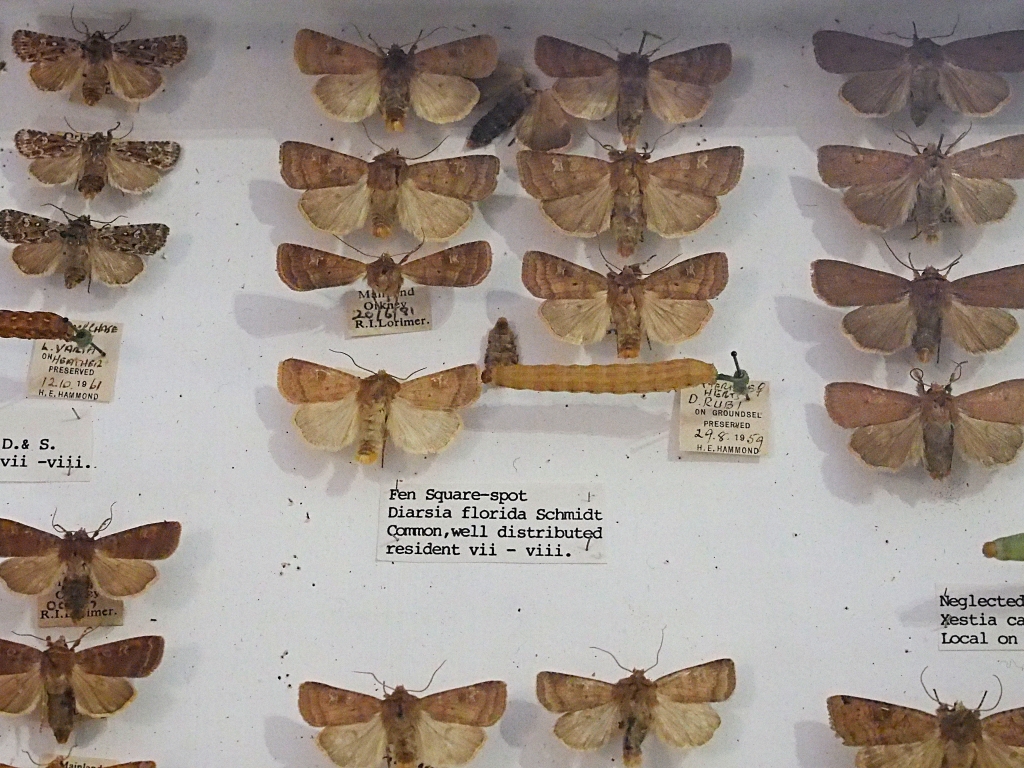
Fen Square-spot. A bit of a taxonomic and identification nightmare.

Looking at NBN the distribution of this species is disjointed. The Orkney population is out on a limb. In the south of UK. D. florida has a flight period between the two generations of D. rubi. However, in the north - Orkney - the generations are concurrent. The genitalia of the two species are very, very similar and the species are not seperable by gendet. The theory is that D. florida is in the process of evolutionary separation from D. rubi. So are the Orkney records good? To my eye the specimens in the cabinet draw look to be the same size as those of D.rubi, the two moths below. I need to go back and take a closer look and do a lot more research. Ideas welcomed.

There is more of the Lorimer collection in Kirkwall Archive, a visit will be on the agenda for the New Year.

I've also been going through the micro-moth list for the county. I've written a draft recommendation for what could be added and what could be removed. But, further research is required for a good few species.

Actual moth field work has involved searching by torch light. There are still a few Mottled Umber around.


Mottled Umber, upper and lower.

Unusually this one appeared on the kitchen window. That evening there were 51 Winter Moths in the garden, including three pairs in cop.

Winter Moth, male (fully winged) and female.

Winter Moth.

Last night there were 13 before the storm, including one pair.


Winter Moths.

Quiet on the bird front, although the Great White Egret is present on Parro Shun for an hour or so most days. Highlight was most likely the c450 Jackdaws that flew over the house in the dusk yesterday evening on their way to roost. This was a record number, the previous high count being somewhere in the low 300s I think.


Fiedfare.

Lapwing

Lapwings, Golden Plover and sheep.


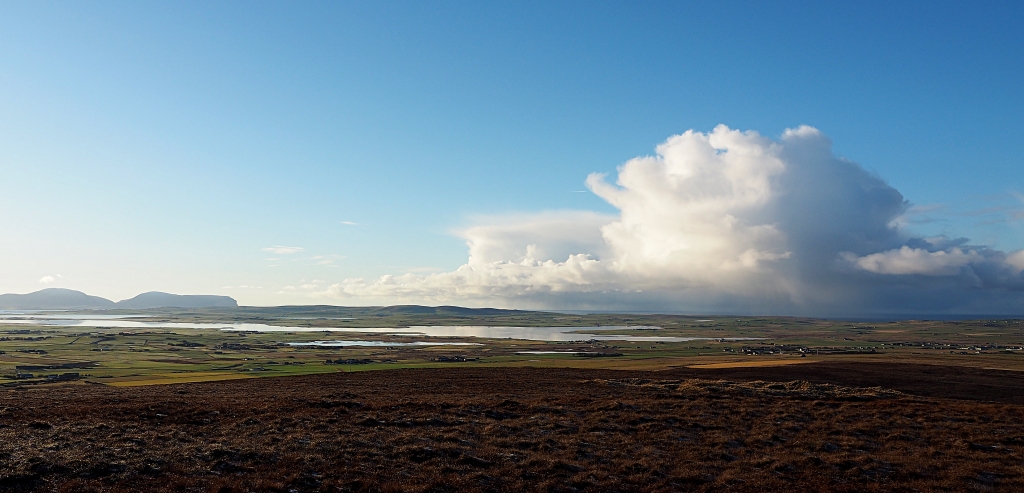
The Shunan from the garden the other evening.

Season's Greetings to all.

Monday, 11 December 2023

Strandings

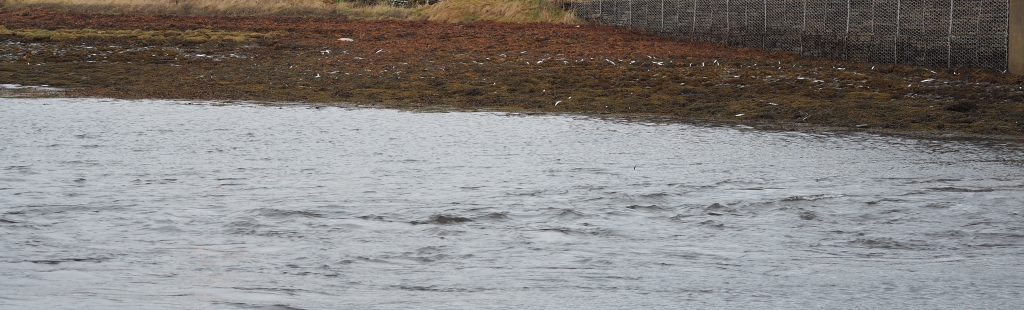
Two huge strandings of Atlantic Saury, Scomberesox saurus, (iRecord calls these fish Skipper) have occurred here. The first at Shapinsay on 10th Decmber and then here on West Mainland the next day. There are thousands of fish on the shore between Finstown and Kirkwall. I went to Finstown yesterday and took the photos below.


These are not dead fish washed ashore, but fish deliberately swimming on to the shore. I put a few of the living back in the water, but mostly they just swam back again.


This is quite a rare fish here, there were a few caught by Sea Trout fishermen at the end of October, also at Finstown.


Against my boot for size, c300mm.

Identification feature, the arrangement of the small fins along the rear of the body, ventrally.

 Why did this occur? For me the most likely theory is to do with the amount of freshwater running into the shallow area of sea where the fish have been in the last few days. The burns are putting millions (?) of litres of freshwater into the sea, could this have disorientated the shoal? It has been suggested that a lack of food might cause this behaviour, but I can't really see why that would lead to the fish swimming on to the shore. I have wondered about a parasitic infection, parasites can cause their hosts to behave differently for the host's benefit. These events have occurred elsewhere in the world previously with this species of fish.

A Great White Egret was back on Parro Shun yesterday. And again viewable from our kitchen. Parro Shun is the small water between The Shunan and the main road. At the moment with all the rain that has fallen it is all one water body.

GWE on The Shunan a couple of weeks back.

Once the freeze warmed away I've had a couple of walks around the garden with a torch and a camera fitted with a flash and very simple diffuser, see previous post. The first Winter Moth was yesterday, but finding a female Mottled Umber was the highlight. Tonight there were just two Winter Moths, but it is very cold tonight. Some milder weather would help. 

Winter Moth, male.

Pupa of Large White Butterfly, which I came across during nocturnal meanderings.

Female Mottled Umber, not something I've come across many times before.


Saturday, 9 December 2023

Frosty

It was as frosty as I've known it here earlier this week and the end of last. Even when the weather broke the ground was still frozen below. 

On Friday we walked up the Kame of Corrigall, the low hill behind our house. It was a beautiful day and from the top we could see the weather slowly advancing from the north-west.

The Kame is the hill to the left.

The weather is coming.

From the top.

The road home.

We went to The Ring of Brodgar the next day, where it was even colder, and the light was spectacular.


Loch of Stenness shore.

Loch of Stenness shore and Hoy.

Reed Canary Grass at Loch of Stenness.

A late afternoon amble to the Loch of Bosquoy.

There were some birds, Whoopers and Mutes in the ice free pools and Lapwings and Golden Plover roosting on the ice.

Mute Swans, Loch of Bosquoy.

Plovers roosting on the ice.

The cold weather disappeared the Great White Egrets, Grey Herons and depleted duck numbers significantly.

There were still visitors to the feeders in the garden but the hoped for Coal Tits and Bullfinches have yet to appear.

House Sparrow, male.


Starlings.

Compensation came in the shape of Merlin through the garden, Kestrel and just the second Peregrine of the year by The Shunan, Hen Harriers regularly through the garden or nearby and Short-eared Owls hunting nearby.

Cold plants....

Meadowsweet.

Selfheal.

Spear Thistle.

Wild Angelica.
And then the rain came.


Friday, 1 December 2023

Orcas (but dipped the Humpies)

There's been a bit of cetacean activity in The Flow recently and I've kept an eye on the local group news channels. Things looked interesting this morning with Humpback Whales seen yesterday and Orcas reported this morning. When I saw the message that the Orcas had headed across from Hoy into Bring Deeps I gambled that they might head east towards Hobbister. These guesses often don't pay off, Orcas are not the most predictable of beasts.

After a drive and a tramp with the hound I got myself perched on an appropriate cliff top and started scanning. It didn't take long to find distant Orcas.

Male Orcas heading towards Scapa.

I was tracking these two and also looking for the Humpback Whales which had been reported from a little further east but at a similar range. Also distracted by weird Grey Seal behaviour, noisily occurring directly below me.

Of a sudden I heard a familiar sound very close, the females and young of the Orca pod had coasted east and were immediately below me. Darn! I'd a good view to the west and had completely missed them arriving. Grabbed a few very hasty shots and rubbish video as they rapidly disappeared.


This is possibly 27 herself, she's the boss of the 27s and had a calf about a year or so ago.

 ...and all too soon they were gone.

Not very good video of the pod disappearing into the distance.

An explanation of this behaviour would be of interest. Every time the swimming seal approached the one on the rocks blew more bubbles. Is this aggression or courtship? Or something else entirely?

Yesterday evening I had a scout around with a torch and camera looking for moths. Winter Moth was the target species, with vague hope of Scarce Umber. It was a bit cold, but I did find two Mottled Umber.


Mottled Umber.

Top notch flash diffuser I used for these moth shots, baking paper roughly folded, masking tape. Hi-tech.

One of my E-M5 Mk11 camera bodies played up a bit recently. Subsequently it's been ok but I'd resolved at that point to upgrade. One of the issues with the E-M5 Mk11 is the tracking of birds in flight. Whilst better than the various Canon compact cameras I've owned previously, including the M series, it is still not the best. I've been on the hunt for an Olympus E-M1 Mk11, still old technology but reputed to be the best "bang for the buck" going. I finally found one I liked the look of on MPB, and when it arrived it looked brand new and the mechanical shutter had been fired fewer than 800 times. I'm still getting used to it as there are significant differences from the E-M5 Mk11s but getting there. The Orcas above were taken with the new camera. Here are a few other early efforts.

Golden Plovers in flight.


Harbour Seal.

The Great White Egret was absent today, but so were the ducks as The Shunan is frozen. I suspect it is stalking around in a burn somewhere.


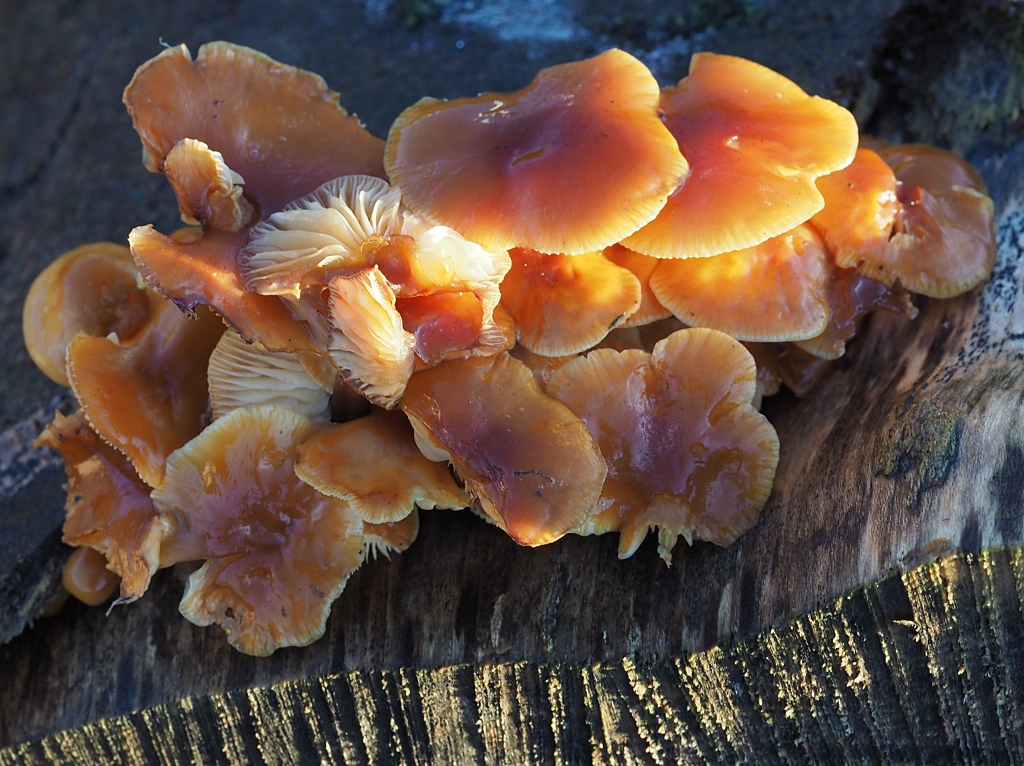
I came across this bracket fungi today, I need to try to find out what it is.


Time to head to the Danish fungi picture ID site (see side panel).

The hound, not so interested in Orcas and Grey Seals, much more interested in Woodcock and Red Grouse, which we also saw today.