Sunday, 29 September 2019

Keeping pace

Work is definitely tiring me out more these days. I find it hard to keep up with the blog so posts may be a tad brief on words, it's a struggle to sort the pictures out. Anyway work has its benefits, a child found and caught this on the playground the other day.


Dytiscus semisulcatus (marginalis - the great diving beetle is orange/yellow beneagth)

As hoverfly recorder for the county I'm supposed to be good at identifying hovers, but I often find them a challenge. So I needed some help identifying this which was perplexing me for a couple of hours (many thanks to Roger Morris). I don't tend to find many unusual hovers either, perhaps I'm not very good at looking for them. Anyway, I seem to have managed a second for the county with this Xanthandrus comptus which was in my actinic trap last night (Harray). My favourite 40W trap in its corner under the trees scored again (nearly all my exciting moths this year have come to this trap in this position) and in the past it has accounted for the occasional slightly more interesting hover. This species has a very southern distribution in the UK and until relatively recently was considered quite a rarity even in southern England. The map doesn't show the Shetland records, there were ten in a few days in 2000 and the single previous Orkney record in August 2017. In the UK this species is strongly associated with migratory influxes, this fits well with the occurrence of a range of uncommon migrant birds in the county over the last few days.

 Xanthandrus comptus female

 
 Distribution map for Xanthandrus comptus.

 Some nice moths recently with Small Autumnal and Red-green Carpet new for the site. Seasonal Brick, Small Wainscot and Setaceous Hebrew Character.

 Small Autumnal

Hoverfly recording scheme map for Xanthandrus comptus.

 Red-green Carpet NFS

 Ruby Tiger

 Brick

 Setaceous Hebrew Character

 Small Wainscot

Craneflies are still a tad challenging, pretty sure this is Tipula confusa.


Birds have been less than too exciting, I've so far dipped on the glut of Yellow-browed Warblers, although a Phyllos shot past me as I was working on the moths this morning and promptly vapourised.

Best was the day with four Black-tailed Godwits, a Merlin and a few Redwings, but there have been hundreds of Swallows and thousands of Common Gulls.


Whilst walking back up the track in the dark on Saturday evening at about 10:15, having fallen over on the way down.... I was following moths and other larger insects with the torch beam. Getting near the house something flew and I tracked it in the beam, a caddis it looked like. There was some wing sound and a click as something, which could only have been a small bat, snatched the insect. Bats are very uncommon here, I've never seen one around the house before and there are just a few regular sites in the county. In the last few days a Parti-coloured Bat and a Nathusius Pipistrelle were found within 10 miles of us, good chance that this was an interesting migrant. With luck I may have a second chance as I've been offered a bat detector to use this weekend.

Wednesday, 18 September 2019

Trapped last night

First time for ages, the weather has been less than conducive. Well worth it, NFM Red Sword-grass.


More expected was Brindled Ochre.


A puzzling, slightly oddly coloured Bembidion was confirmed as just tetracolum. However, my continuing battle with craneflies produced this Limonia nubeculosa. Common enough but fairly distinctive, enough to get on the right track anyway with the stripey femora.


Limonia nubeculosa.

Will post my Glasgow pix shortly.

Monday, 2 September 2019

Cuckoo

Identifying various things is certainly driving me that. I swept a nice looking Carabid beetle from vegetation on our track, not far from the house yesterday. I'm pretty confident with Carabids but this proved to be a challenge. An hour before supper I couldn't get any decent pix with the digital microscope (it doesn't work so well with shiny dark coloured things) so gave up. After supper I got the optical microscope out (it is just a cheap little thing, but ok). Using the Luff key I just went around in circles. Using online pictures I ended up with a genus that doesn't occur in the UK and is very rare. In the end after three hours effort I posted a not great picture online and of course got a result for this morning. Amara aulica; now called Curtonotus aulicus. The name change is sensible if for no other reason that this species looks nothing like a typical Amara.

Curtonotus aulicus

Equally craneflies, which are a bit of a new enterprise for me are also completely doing my head in. Several yesterday I just could not do and gave up. One I got close to but have apparently got it wrong.... These things are tricky. The trouble is to get the baseline of knowledge of the common species, the four or five or six that are most frequent at each season, but at the moment I'm failing to achieve that.


I'd thought this was Tipula confusa but apparently it is perhaps more likely to be T. obsoleta (which I had considered).

But there was a Cuckoo this morning being mobbed by Swallows and Meadow Pipits when I went to feed the pony.

 Ear Moth, most likely though Amphipoea oculea but should be recorded as Amphipoea agg as I haven't done the gen det.


 Triangle Plume, I do like plume moths.

A worn Northern Spinach I suspect.

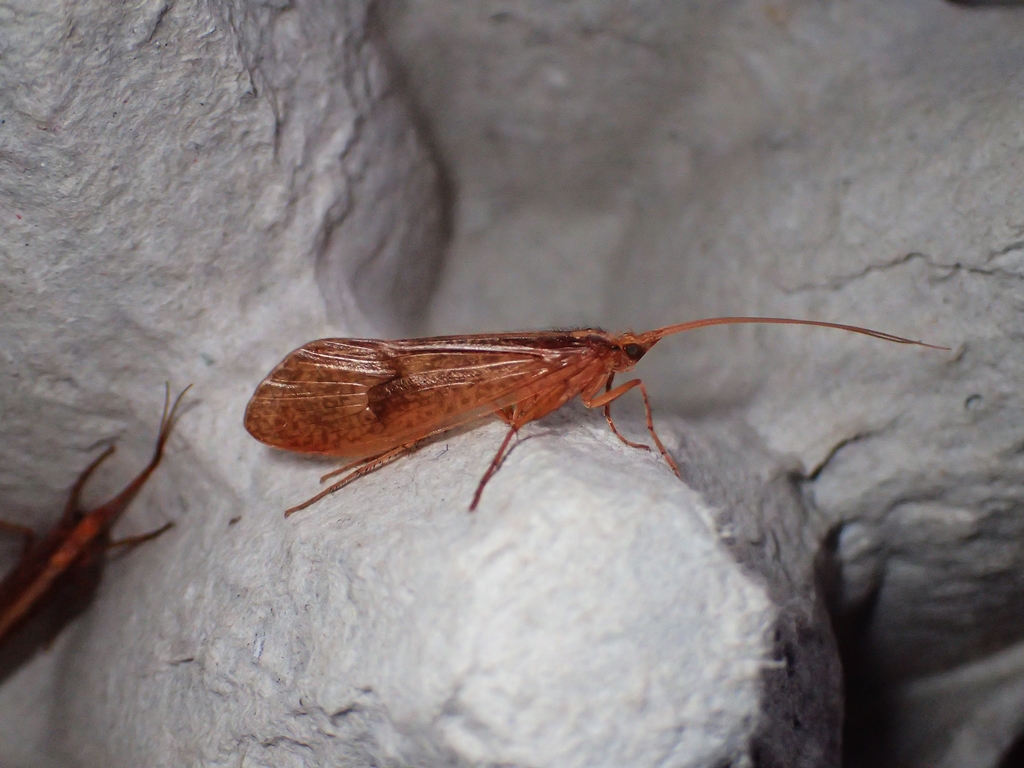
In contrast to the craneflies I do feel I am getting to know some of the Trichoptera a bit better. They are hard to ID mostly but there are some quite distinctive ones.

 Limnophilus lunatus - note the moon shape at the end of the wing bordered dark.

Stenophylax pernistus, the confusion species apparently doesn't occur here, still catching a few of these.

 Grey Seal

Harbour Seal

Both photographed metres apart within a minute or two. Usually I only see harbour Seals at this location and Greys are usually less confiding. Nice comparison of their faces.

Five dead Hedgehogs as I cycled on Friday, all within half a mile, all road casualties. 

Gratuitous bird photo....


I went for a bit of a protest, joining 90 or so others in Kirkwall. Worrying times if you ask me. The suspension of the democratic process is an outrage. Hopefully the perpertrators will come a croppa...


I thought this sack writing could (worringly) be prescient (hopefully not).Scary.


Friday, 16 August 2019

Garden invader

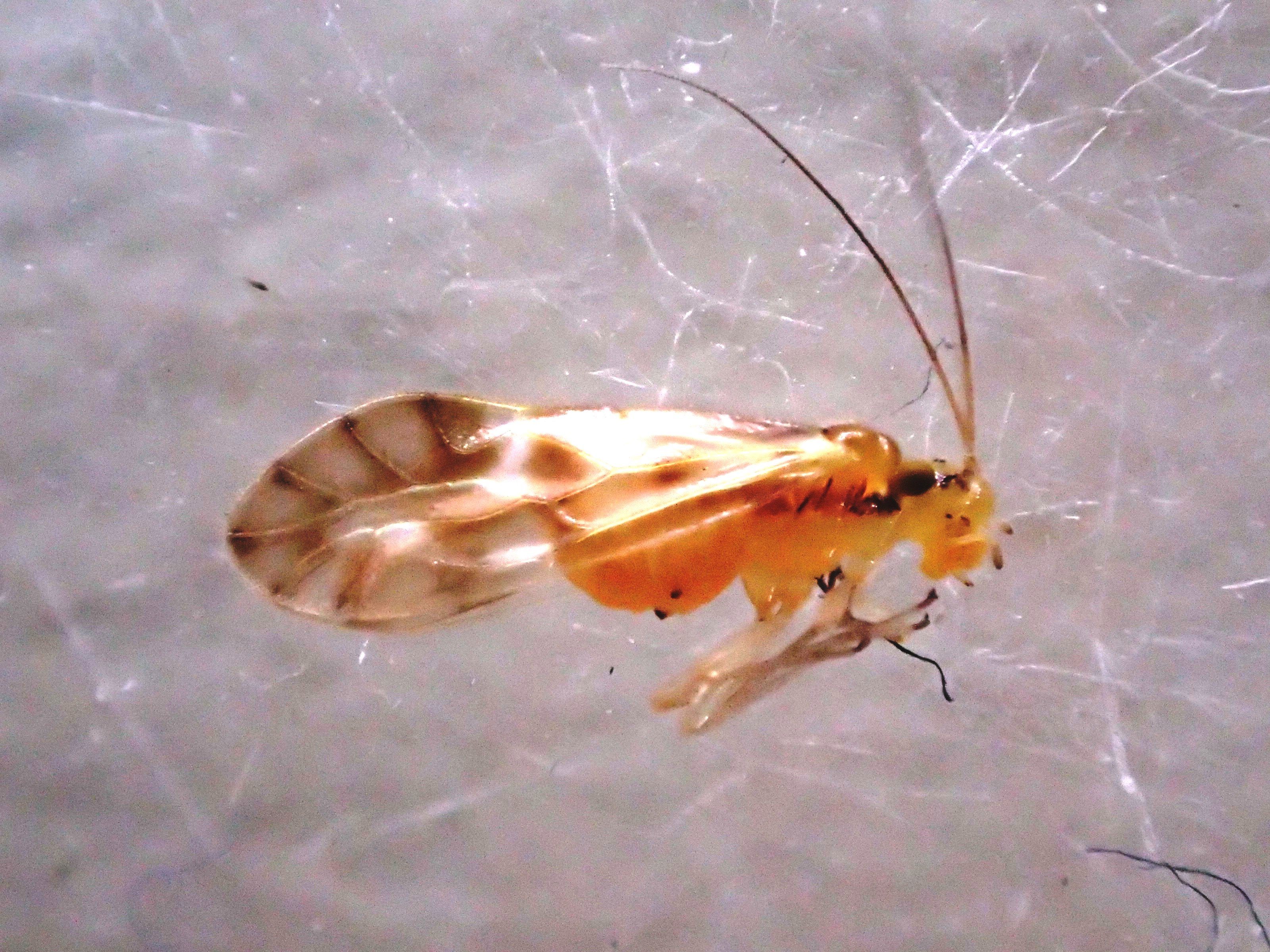
I paid a visit to BH who pan-lists his Orkney garden on Burray. I managed to add at least one species to his garden list finding a nest of the ant Myrmica ruginodis. There were lots of larvae of the Devil's Coach Horse Staphylinus olens and I glimpsed but dipped on the hoverfly Cheilosia bergenstammi. A bit of bush bashing of some Downy Birch produced this interesting Psocopteran which BH had also found in the house a few days previously.

Image 
Chilenocaecilius ornatipennis  (a barkfly - not Diptera, Psocoptera) Photo Barrie Hamill.

 The species was first found in Ireland in 2015 and has subsequently been located at a few locations across the UK, most likely it is now quite widespread but (being tiny, and being of an obscure order of beasts) is rarely recorded. Anyway I quickly found two in the net. The species is native to Argentina and Chile. https://www.brc.ac.uk/schemes/barkfly/homepage.htm  
Anyway useful to find in the garden as it proves the original one didn't just come in with the shopping or escape from BH's car.


Update, a bit of bush bashing in my own garden on West Mainland has revealed the species (I think) here, need to check, but it looks good.


Found on both Ash and on Wych Elm -
Chilenocaecilius ornatipennis
We had kicked off emptying BH's Heath trap and I was very pleased to see White-line Dart, a new species for me.


 Two were in the trap.

Note orange on third attennal segement making this
Haematopota pluvialis rather than crassicornis.

We looked at various other Dipterous things and I tried my best to turn this Platycheirus manicatus into tarsalis, to no avail.

 Platycheirus manicatus

BH showed me various fungi, leaf mines and liverworts amongst other things.

And I found Nettle-tap, one of my favourite moths.


 Bashing the Downy Birch produced a lot of early instar aphids which could be Downy Birch Aphid, Euceraphis punctipennis.

 Euceraphis punctipennis maybe

Also this bug, Closterotomus norwegicus, the potato capsid.

When I got home the family proved how well trained they are, not only had Louise checked out the Rook corpse in the lower field but she'd noted Nicrophorus investigator. Younger daughter also chipped in with the site of a dead Hedgehog and reported that N. investigator had also been there.

I quickly headed off to find the two corpses. The Rook rewarded me with two Nicrophorus investigator and, a patch tick of two Thanatophilus rugosus. Now strictly I should have brought the corpse back and extracted it as I'd also glimpsed another beetle in there as well as a pile of Staphy. But I decided to leave it lie, not least because my ID backlog is intimidating.

Dead Rook

Thanatophilus rugosus

Nicrophorus investigator