Friday, 7 January 2022

Birding days.

 I walked on the patch and into the Uber patch, just to Loch of Bosquoy, on 2nd January. Out of the door and 13 Pink-feet flew over, nice. Checked the stubble field where there were still at least 90 Skylark, perhaps more, and the Chaffinch/Brambling flock also still present. The Brambling haven't been so keen on our garden since the ringing expedition. There were more Pinks down at the loch.
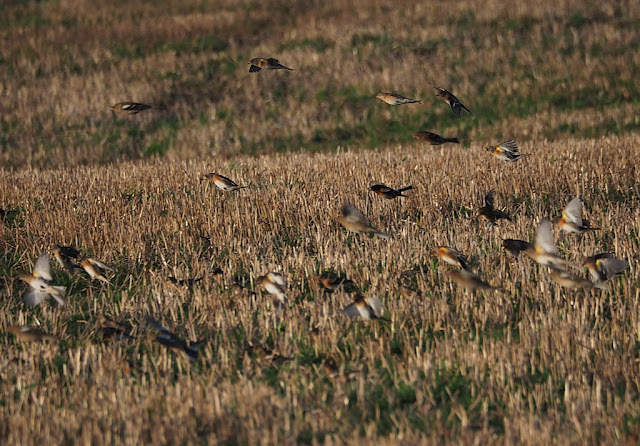
Brambling and Chaffinch.

There was a large flock of Golden Plover, I logged 700 but there may have been in excess of 1,000.

If you want to count them you can let me know how many there are...

Also present were the drake Goosander and four Dunlin, but no Blackwits or surprising quakers. On the home patch, fairly standard birds. Today a flock of Goldfinch, 13, and Greenfinch, 16, arrived and a ringtail Hen Harrier first hunted for voles in the long grass and then had a go at the House Sparrows in their buddleia/honeysuckle tangle, unsuccessfully.

A trip to the crow roost at Durkadale produced a possible Rough-legged Buzzard, jousting with two Common Buzzard, it was elusive and I couldn't nail the ID, annoying as I've never found a Rough-leg for myself. However, there were 162 crows, all Hoodies as far as I could ascertain in the crow pre-roost. Near Kirbuster there had been hundreds of waders and gulls in the fields. I couldn't find anything uncommon except two Ruff, but 79 Redshank was a good count along with 325 Lapwing and not far off 100 more Goldies. A ten minute drive from the house and there are several hundred Black-headed Gulls but at home they are very, very uncommon at this time of year.

Nearly finished writing my sections for the 2020 Orkney Bird Report, a bit delayed in its production. However, things are back on track and I'll be expecting the data for 2021 to be arriving in the inbox early in February, it's not really my favourite job but I don't write many species, shrikes to corvids, not onerus really.

Thursday, 6 January 2022

Bioblitz and 365.

I've set up a bioblitz for a year on our Wee Wood, I've based it not just on the wood itself but the 100m square it sits in. It will be interesting to see how many species I can find there in a year. So far Winter Moth, Hen Harrier, Tree Slug and Brown Rat. The rat is dead in one of the stoat traps. 

Wee Wood.

I have set out to do this in previous years but never followed it through, with more time, and I've set it up in iRecord there is a greater likelihood of me completing it. Interesting indeed as to what I can find in a 100msq anyway. I'll update regularly.

Total to date - 4 species.


The 365 challenge, finding 365 species new to me in a year is in place. Some of the species are surprising, and a very easy tick. For example Common Limpet which I've always presumed but with no real knowledge, and there are a few confusion species. I'm allowed to count things like that, species I've not identified because I didn't know about the complexities of the identification process. Razor shells, Ensis species, are a similar thing, and these are very hard to identify correctly. I'm going to try and get all the 365 in Orkney, that will be a bit more of a challenge. However, adding species from elsewhere may make this challenge more possible.

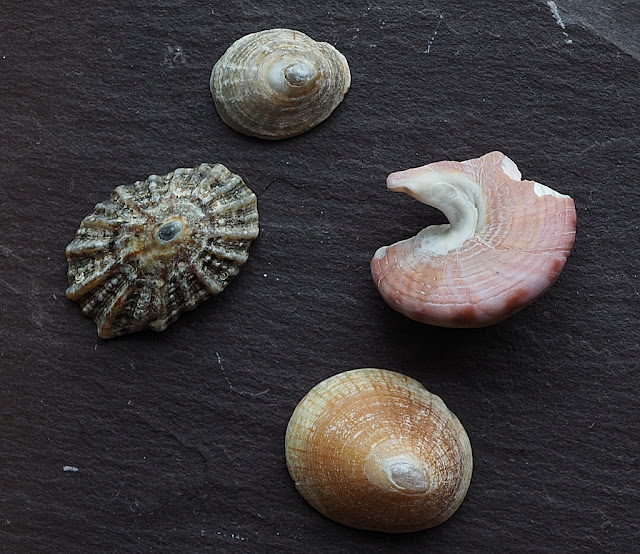
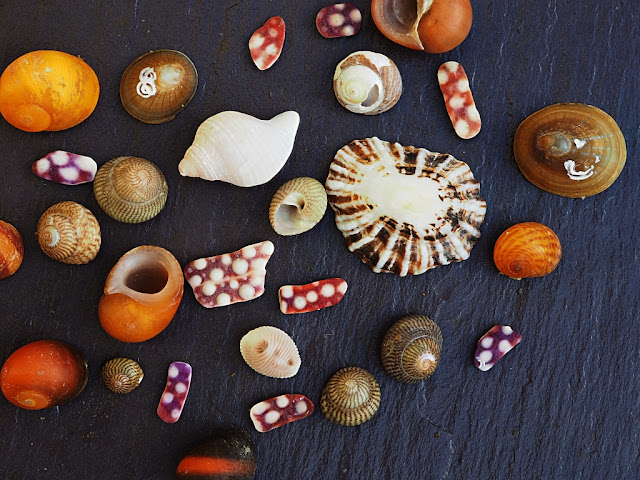
These are shells I collected yesterday from Point of Buckquoy. We got there just after the high tide and had a search of the beach, actually hoping for more pelagic things, as the tide fell. I suspect there are three species for me here. Calliostoma zizyphinum, Painted Top Shell, the broken one top right; Patella depressa, mid-left; I'm wondering if the bottom one is Patella ulyssiponensis, but both it and the top one could just be juvenile Patella vulgaris, it's tricky.

Score to date, without including any of these - 14 species.

I have been advised, and of course it's correct advice, that it is far more valuable to identify living animals as then their provenance is much more certain. I did have a search just before New Year and managed these two.

Patella vulgaris.

Nucella lapillus.

It would be excellent to get some birds amongst my 365. This doesn't mean I'm going twitching, however, I reckon a couple of trips to North Ron and/or Papay might be helpful.

New Year's Day night and there were 88 Winter Moth around the house, a huge number.


Winter Moth.

Hoy from Warebeth, afternoon 01/01/2022.

Hoy from Warbeth, late afternoon 07/01/2022.

From The Links beach, 06/01/2022/

Thrift stems, from Skiba Geo, 05/01/2022.


Friday, 31 December 2021

Shells, Leps and Ringing.

After Christmas we went out to Evie again to look for shells. I have a bit more idea of what I'm looking for now, and a slowly developing understanding of the difficulty of identification. There are some great resources out there. Some exceptionally high quality information can be found here - https://www.flickr.com/photos/56388191@N08/albums scroll down to the marine animals, the photos are pretty amazing and the information is reliable, accurate and very well researched I would judge.

With a visit to Brough of Birsay I've added another eight species plus two tricky species pairs which are resolveable but I'll need to find fresh animals, and alive for one species pair. The high tides in early spring would seem to be the best opportunity. In the meantime there are plenty of common shells for me to still find. Thanks especially to IS for essential help and much encouragement and advice.


Team effort on Evie Beach.


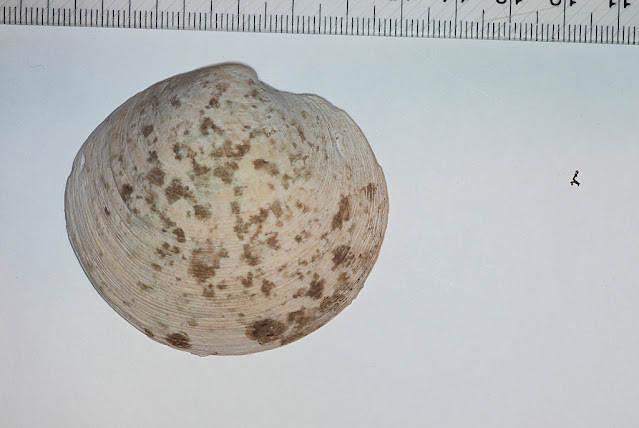
Dosina exoleta (Rayed Artemis) - thanks YS.

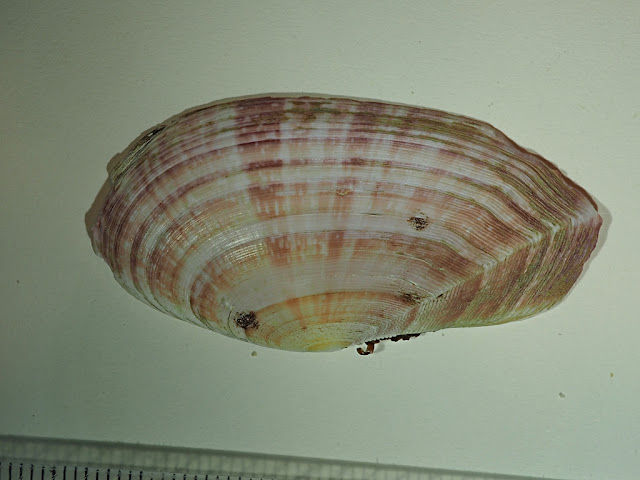
Donex vittatus (Banded Wedge Shell). Reidentified by ST as Gari fervensis (Faroe Sunset Shell).

Developing a photo technique for the shells has been a bit of a challenge. Best is using the conservatory and placing the shells on slate, in shadow. 

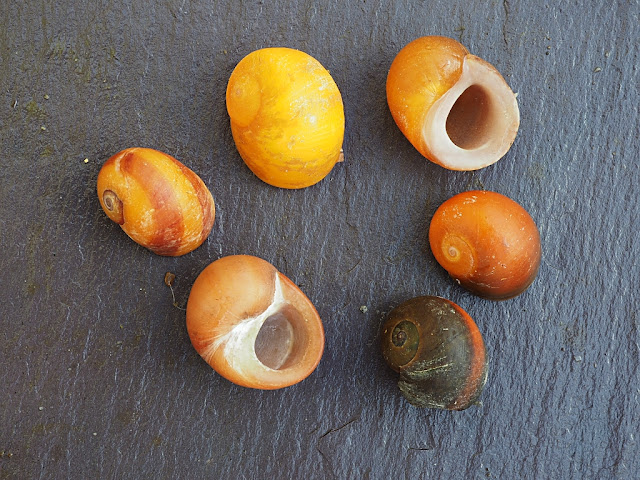
Littorina obtusata/fabialis agg (Flat Periwinkle), very hard to separate, live animals required.

 
A selection from Brough of Birsay including a Spotted Cowrie, Grey Top Shells, Blue -rayed Limpets, a Dog Whelk and various bits of sea urchin.

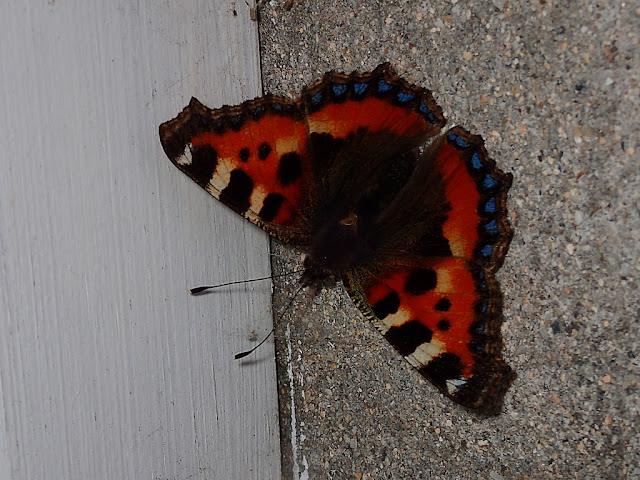
After Xmas tidying found this fluttering around the other upstairs bedroom.

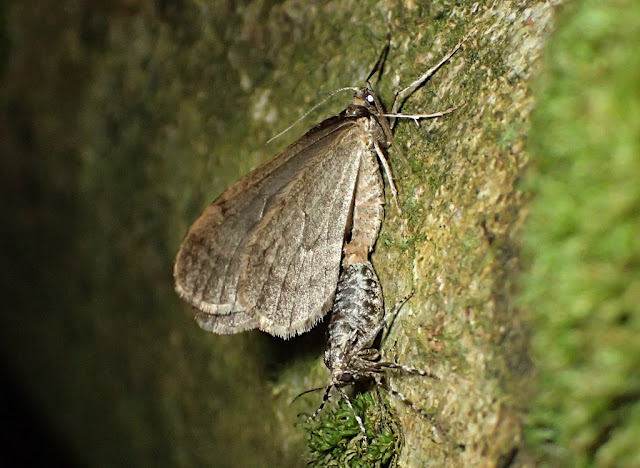
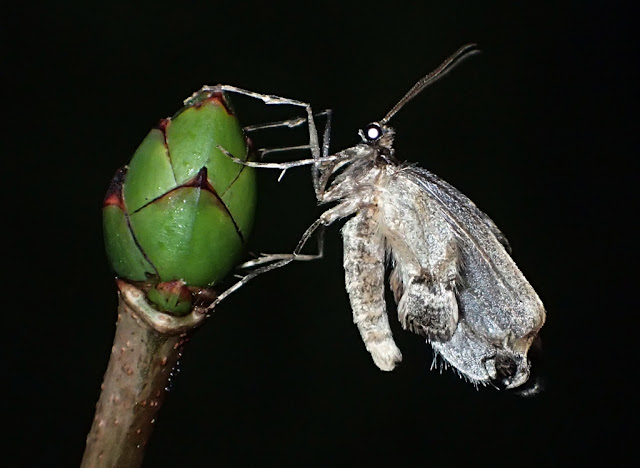
The unseasonal warmth has taken me out in the dark searching for moths. All Winter Moth records have been obliterated with 83 including the Wee Wood today.

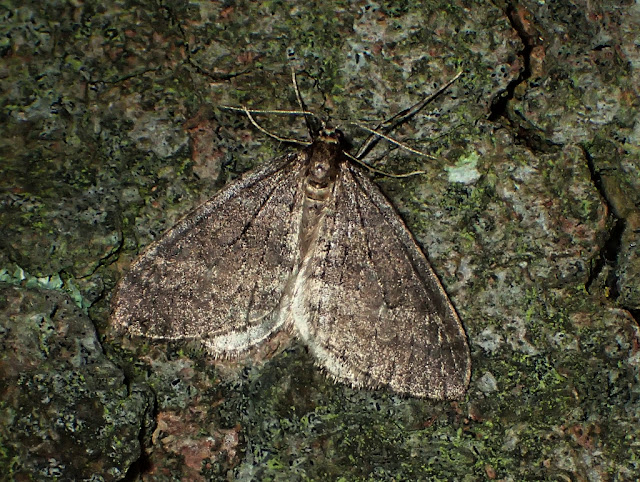
Winter Moth, female.

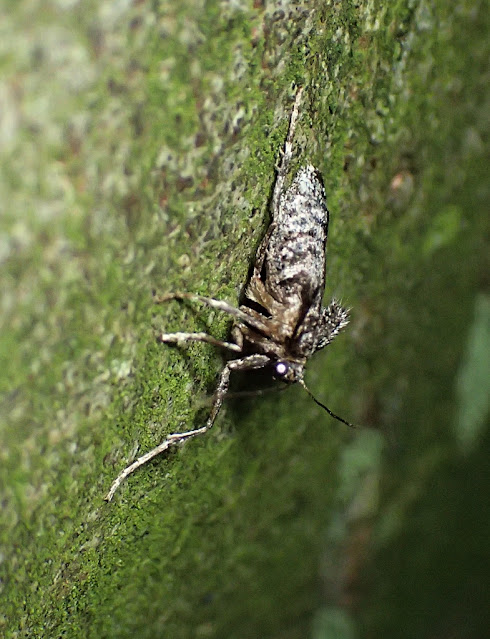
Winter Moth, male.

Winter Moth, pair in cop.

Winter Moth, male, wings unfurling.

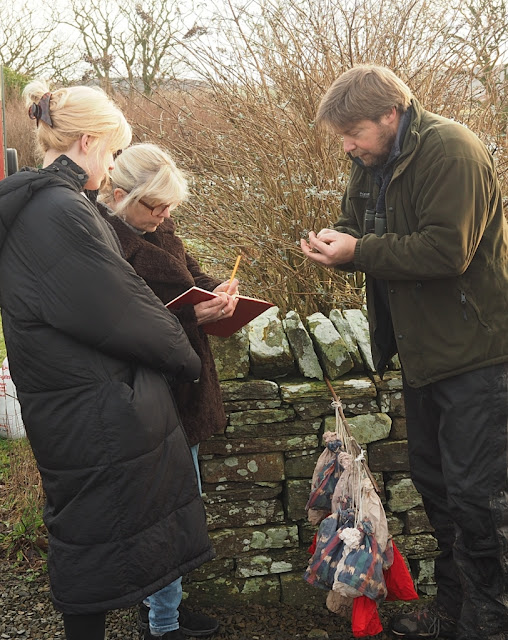
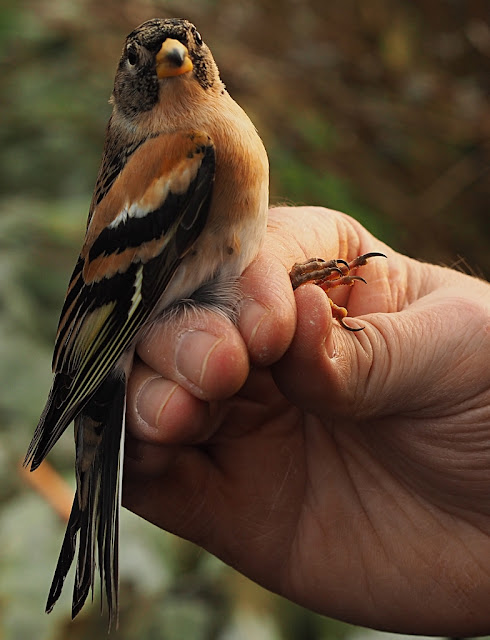
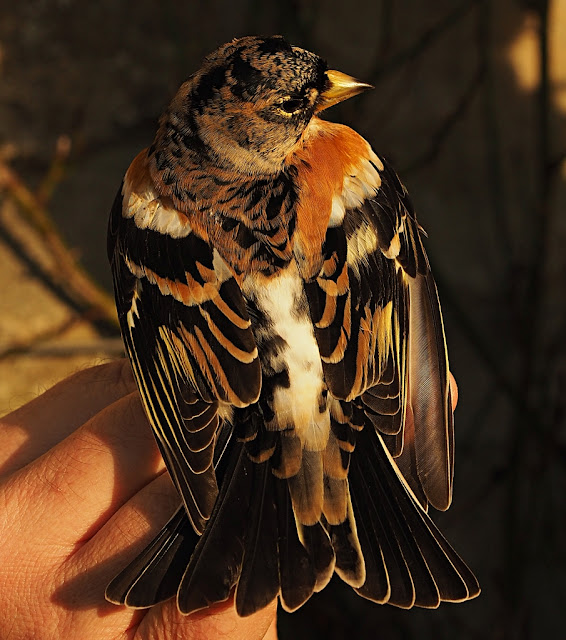
AL has been keen to try to ring our Bramblings. Unfortunately they can be fickle and the first attempt led to a zero return as they decided to feed half a mile away in the stubble. A bit of cold weather over Xmas tho' and things changed. Thirty or so birds were present and come 27th they were still here. 

Clap net in position and Brambling in the trap zone.

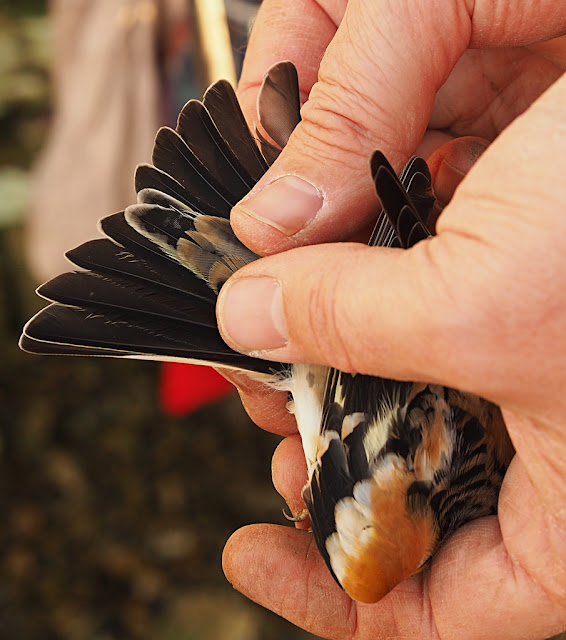
Two fires captured 31, 30 new and a control which was one of AL's birds caught in his Finstown garden.

Team in action, although elder daughter rather lowered the tone by saying "Bitch!" to a 3 female when it gave her a sharp nip.

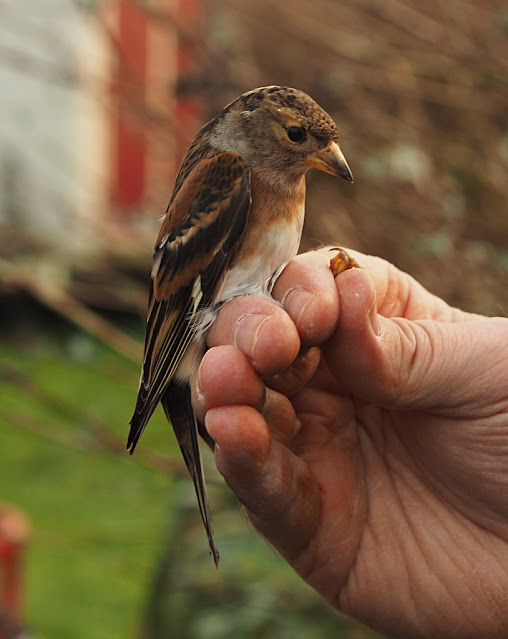
3 female.

3 male.


4 male.

4 male tail.

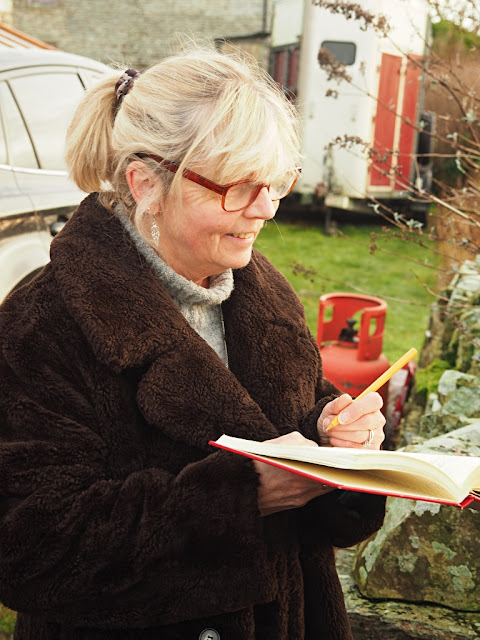
Louise scribing.

Thanks to AL, we're all hoping for interesting recoveries.

Total new species since Xmas Eve (eight days) - 13.


Sunday, 26 December 2021

Sea shells and Christmas.

My thought to record 365 species new to me  over the next year have led me to briefly investigate different Classes. What would be possible? A quick look at sea shells show that there is a huge potential there, but identification is a challenge. Fortunately, thanks to the excellent folk at British Marine Mollusca FB Group help is to hand. 

We went for a walk along Evie Beach on Xmas Eve. It was a lovely day. There were many shells on the beach, so I started picking them up.

A razor shell or, locally, a spoot. However, there are a few species.


Ensis siliqua. Ensis magnus (was arcuatus), thanks ST, these are very, very tricky to ID correctly.

There is an excellent resource for identification here: - https://naturalhistory.museumwales.ac.uk/BritishBivalves/home.php? - see the side panel. And I was led to purchase the NHM published British Bivalve Shells by Norman Trebble (1966). Sadly, there were no prior owner notes in this book which was a tad more than the £1 jacket price! Well worth the £22 tho'.  

This next one caused a bit of debate.

Lutraria lutraria, Common Otter-shell.

I'd been confident this was Mya arenaria, the differences are fairly subtle. There are other Lutraria species that occur here and so a considerable degree of caution in ID is required.


Cerastoderma edule, Common Cockle. Even this common species needs careful ID.


Chamelea striatulla, Striped Venus. In recent years there have been changes to the taxonomy so need to check the Museum of Wales site for the latest name and the history of naming.


Mya truncata, Common Gaper. I managed to ID this correctly with no aid!

Venerupis corrugata.

In mind of the work to identify all these I've decided to take Xmas Eve as the starting point! I think this will be a bit of a challenge, and will likely require a trip or two south, even to England. I'm expecting beetles to come to my rescue to some extent, I have a basic knowledge and know there are lots of species locally that with a bit of an effort I can find and identify. Plants will be another opportunity to add species, especially if I go over to Hoy a few times.

Over Xmas there was a cold snap and the Bramblings returned in force with 36 under the feeders.


Brambling.

A few trips to the coast and Loch of Skaill offered a few photographic opportunities. (Three dead Puffin on The Links beach tho.)

Hoodie Crow.

Teal.

Whooper Swan family.

The local Whooper Swans have raised two chicks but incoming birds from Iceland don't appear to have had a good breeding season with this the first juv I've seen.

On 23 December, Loch of Bosquoy was super. A Goosander, 5 Blackwits, 445 Lapwing, 72 Golden Plover, a Hen Harrier, 98 Skylark and a record 35 Shoveler were the highlights.

Shoveler, Goosander and a Coot.

445 lapwing and some of the Golden Plover.

48 of the Skylark.

On Christmas night there was a heavy overnight frost. Christmas Day was sunny, still and very cold. The beach at Skaill was frozen, the hound managed to fall over. Frosted seaweed is an unusual and photographically interesting subject.


As the days lengthen, yes really, signs of spring. Green leaves of Lesser Celandine breaking through, if frosted.

Lesser Celandine.

A new mammal for my Orkney list, looked to be tethered tho.

Giraffe, near Skaill.

New species 6.