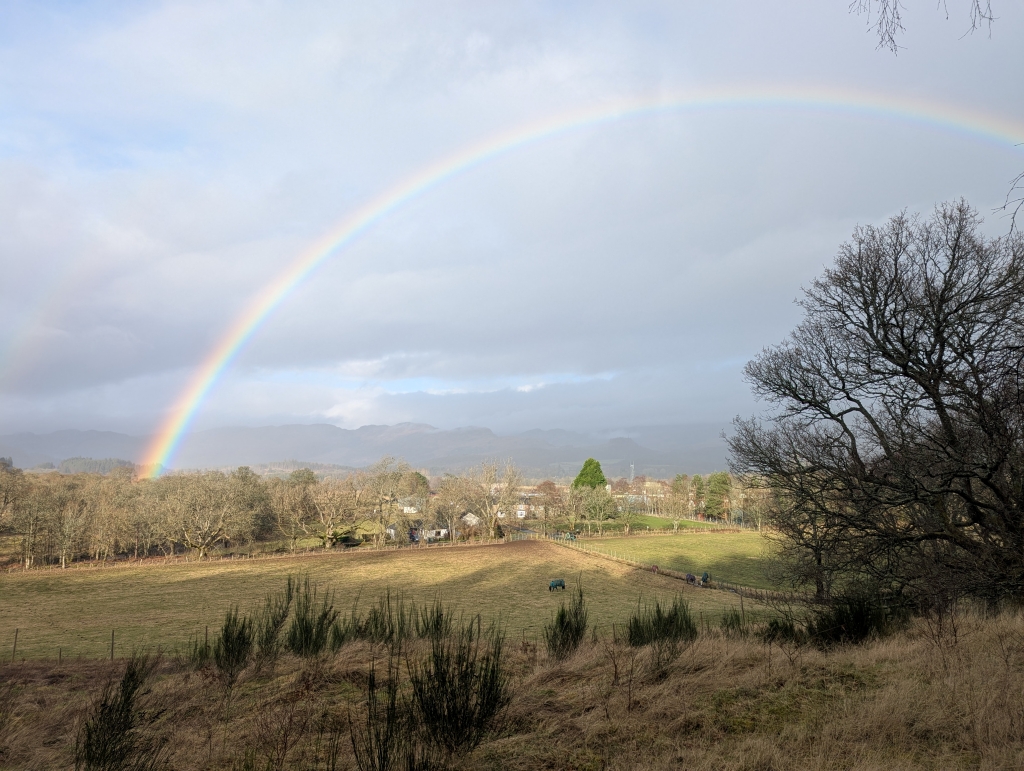
The blog has had a bit of a make-over in order to improve readability, especially of the side panel links, and to remove dead and less relevant links (still a bit more work to do on that). Some new links have been added.
Much distracted by our libraries campaign, but we seem to have won a debate in the Scottish Parliament for this Thursday, thanks to Mark Ruskell MSP, CILIPS and all the campaigners. Unfortunately it is the same day as the Finance and Resources Committee of Perth and Kinross Council meeting in Perth, so we'll have to figure out a strategy - more stuff about libraries on The Many Days blog.
From being absent Siskin is now the second commonest garden bird, 15 around the feeders today.
 |
| Siskin. |
Chaffinch continues to be the commonest species with 53 being the maximum count, but there were certainly more, they're tricky to count.
 |
Chaffinch, male.
|
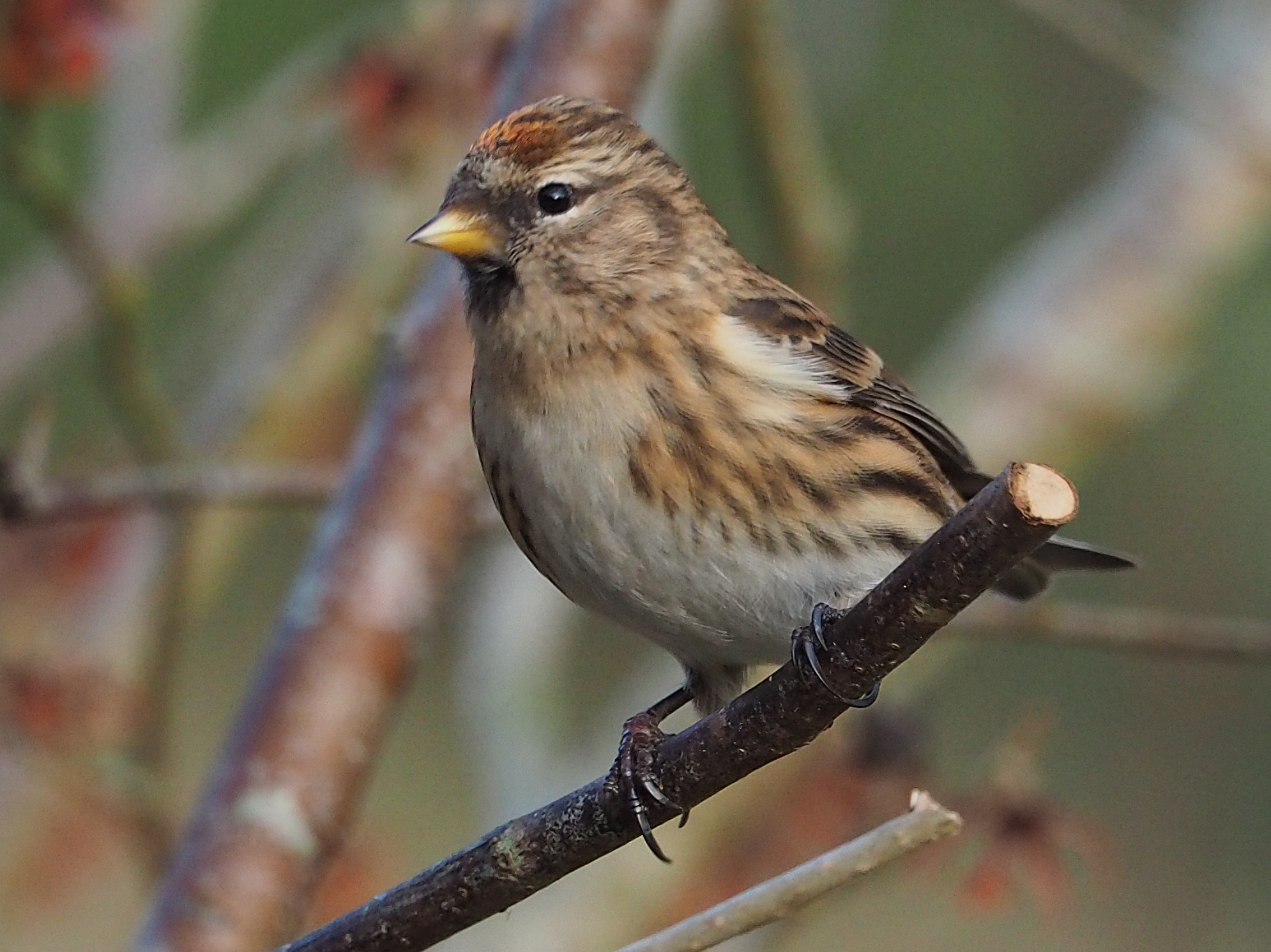
Lesser Redpoll is now also present daily.
 |
Lesser Redpoll (soon to be just Redpoll due to some taxonomic changes, three redpoll species become one).
|
Both Lesser Redpoll and Siskin are very tame and with a bit of patience I can stand in the garage doorway and photograph them in the Wych Hazel. Goldfinch are also showoffs! And third or fourth commonest garden bird.
 |
| Goldfinch. |
Blue Tit has overtaken Coal Tit in the numbers game interestingly. I wonder if this is a seasonal change or if the Blue Tits just took longer to find the new food source. Actual numbers of both these species are impossible to know but generally there can be a maximum of six Blue Titis in the garden at one time to two Coal Tits.
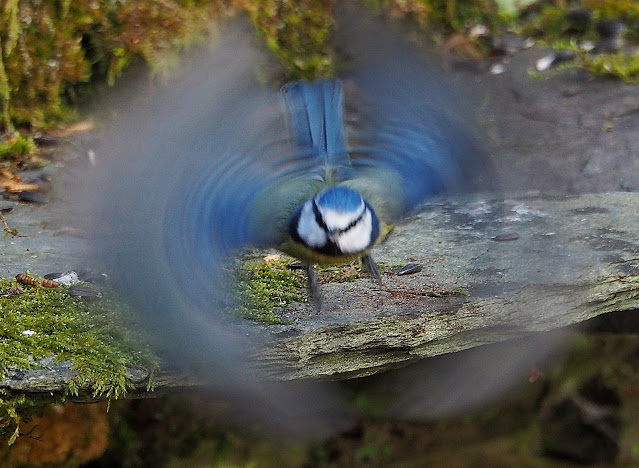 |
Blue Tit; although this image is not sharp, it would have been excellent if I'd got the head sharp, I couldn't resist posting it as I really like how the wings blur to an arc.
|
Other bird observations include the continuing regular Red Kite pre-roost counts with in excess of 90 one evening. 60 to 70 are the more usual counts, but I think there are usually more than I record.
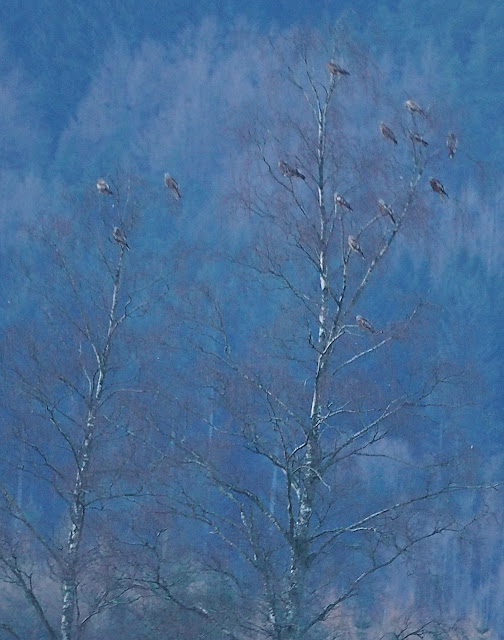 |
Pre-roosting Red Kites.
|
I try to visit Loch Monzievaird once a week. This is a small loch just off the main road to Crieff. It is a holiday resort with lodges placed around one end of the loch, but especially at this time of year, it is generally pretty quiet. It's a good spot for Goldeneye and can have more than 20 Little Grebes. Best birds have been Whooper Swan, Kingfisher and Dipper, and there's usually something of interest, I seem to add an additional bird species or two with each visit.
 |
A pretty terrible image of Loch Monzievaird.
|
The other significant reason for visiting this site is that it is excellent for fungi, lichens and bryophytes. I've added quite a few species to my pan-species list via my wanderings around the loch. Yesterday's excursion was no exception with the finding of Bryoria fuscescens, a horse-hair lichen. A not terribly impressive species but worth finding nonetheless.
 |
Bryoria fuscescens, a horse-hair lichen.
|
I've continued to be evaded by the main target species at this site though, although they are clearly very active.
 |
Signs of European Beaver activity.
|
There have also been recent excursions to Comrie Community Woodland, another site I like to try and record weekly. And to Strowan Woodland Cemetery. The most recent visits to both these sites (actually the first visit to the woodland cemetery) produced new and interesting species. Indeed the visit to CCW revealed a whole new section of the site that I'd somehow overlooked previously.
 |
From the east facing bank of CCW.
|
And some recent finds at the CCW.
 |
Ulota bruchii - confirmed by microscopic examination, a tricky ID though.
|
 |
The liverwort Microlejeurnea ulicina Fairy Beads. Both SG and BH have suggested I've got this wrong. I went back and had another look at my photos and the book (BBS guide). It's a Lejeunea species, a pouncewort. I'm pretty certain it's Lejeunea lamacerina, but currently not 100%, I probably need to go back and find some more.
|
 |
7-spot Ladybird Coccinella septempunctata, always nice to find in winter typically hidden away in a crevice.
|