I've deleted my Substack account, I'd only posted on it once in any case. Substack has been found to be making money from Nazi and far right subscriptions. Whilst all platforms have their issues, it appears that Substack are reacting quite slowly to doing much about what has been revealed by The Atlantic and then by The Guardian. The Atlantic said,
"The newsletter-hosting site Substack advertises itself as the last, best hope for civility on the internet—and aspires to a bigger role in politics in 2024. But just beneath the surface, the platform has become a home and propagator of white supremacy and anti-Semitism. Substack has not only been hosting writers who post overtly Nazi rhetoric on the platform; it profits from many of them."
The Atlantic posted this in late 2023. The Guardian has reported on the issue recently, apparently nothing much has changed. Not a place I want to be...
So I've copied and re-posted my one post there, here.
Wandering
Walking slowly, looking, noticing
This is how you immerse yourself in your environment. Wherever you are.
This morning, for various reasons, I was in Stirling, near to the city centre with an hour to kill. I’ve been taking part in an activity, an iRecord Activity, but it also exists as a Facebook Group, to record the wildlife of cemeteries and kirk yards across the UK. This is a handy distraction in a city or urban area if you have to be there but are uninterested in the shops or other attractions. (Currently, Stirling has a wonderful exhibition in the Tolbooth of art by Ron O’Donnell, but that’s another story.) There is nearly always a nearby kirk yard or a cemetery in an urban area.
In Stirling I’ve been visiting Allan Park South Church.
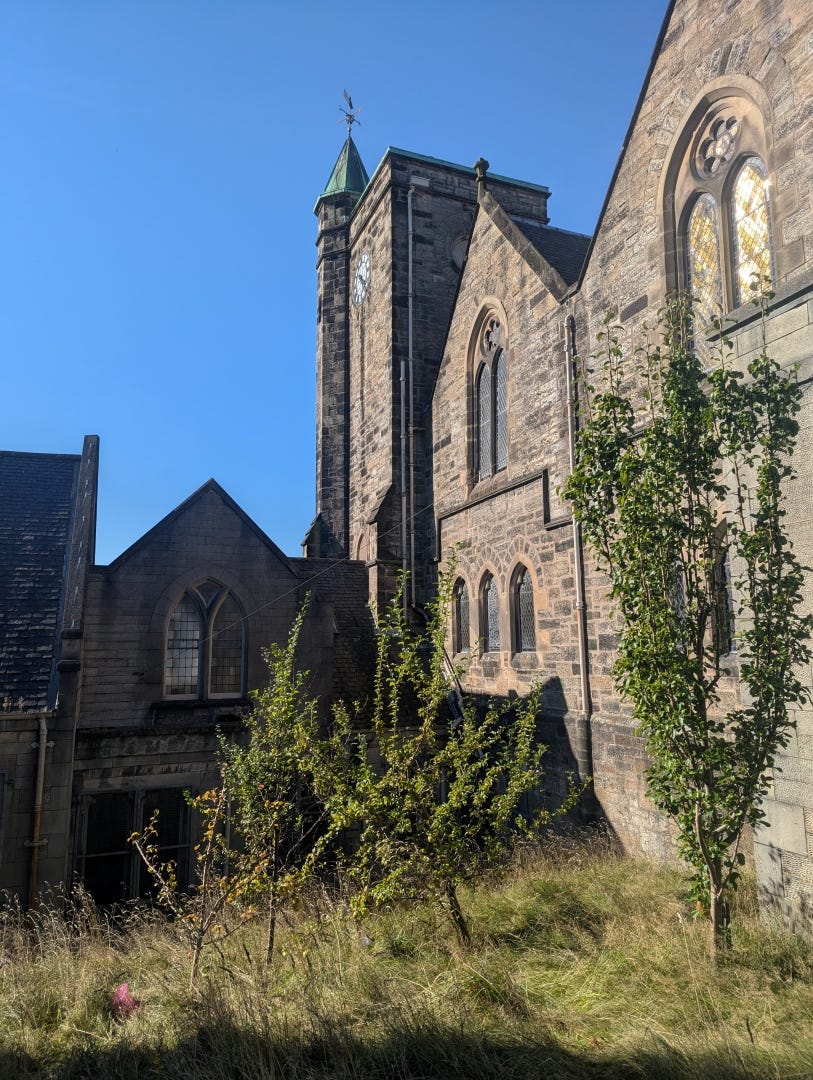
This is not an active place of worship. It seems abandoned, closed and beginning to decay. The grounds are used in part as a car park. At some time in the past, perhaps not so long ago, someone planted some fruit trees at the back, and there are the remains of a roadside garden along the front.
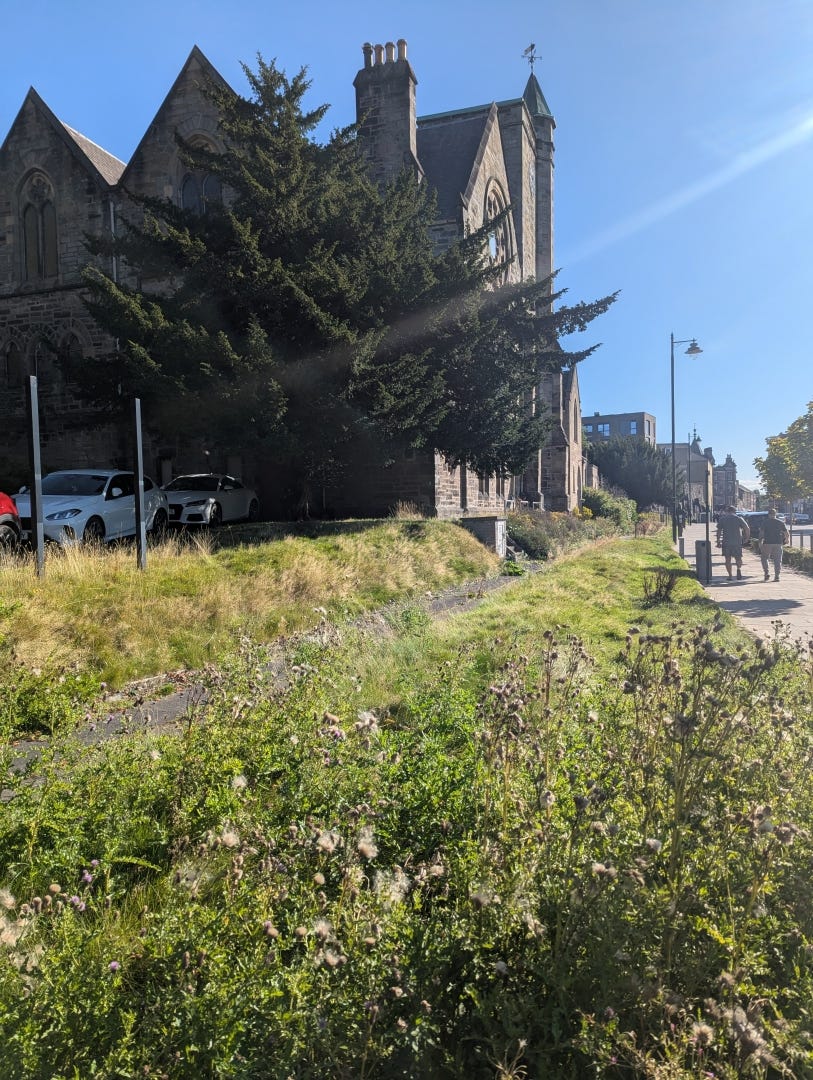
To the wandering pan-species lister (and recorder) the place is a potential bonanza. (Pan-species listing is finding, identifying, recording and listing all the living, or having been alive, things that you find.)
This was my third visit and during these visits, over recent weeks, I must have found about twenty species that I had never previously recorded. These things have included fungi, plant galls, insects and plants. Many of these species are tiny, just a few millimetres in length.
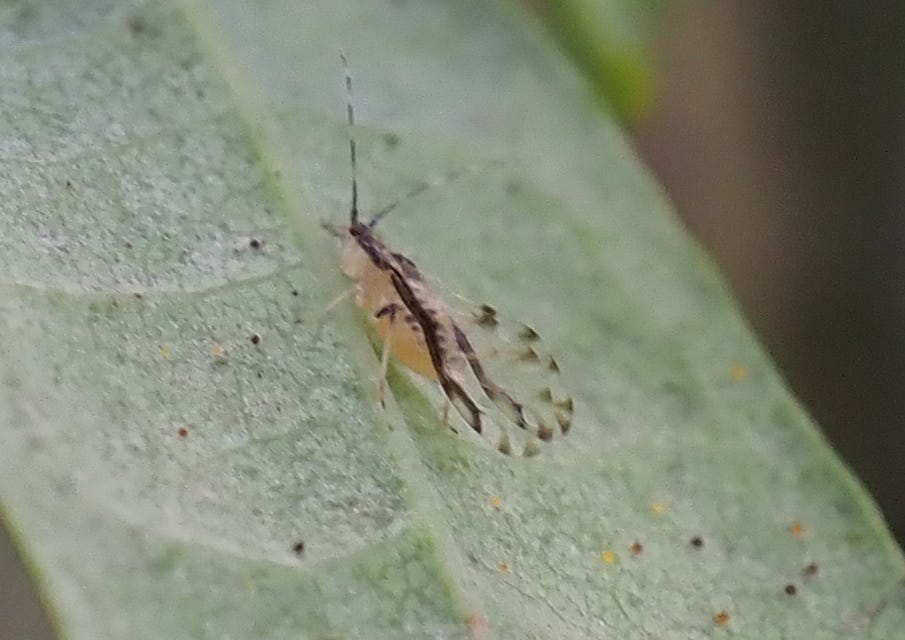
Above is the Lime Aphid Eucallipterus tiliae a very distinctive, but quite tiny insect. This was new to me (NTM) on my previous visit.
There are some tiny sapling oak trees in the grounds and looking carefully under the leaves I have found a few galls. Plant galls may be caused by a variety of insects, in this case by a hymenopteran.
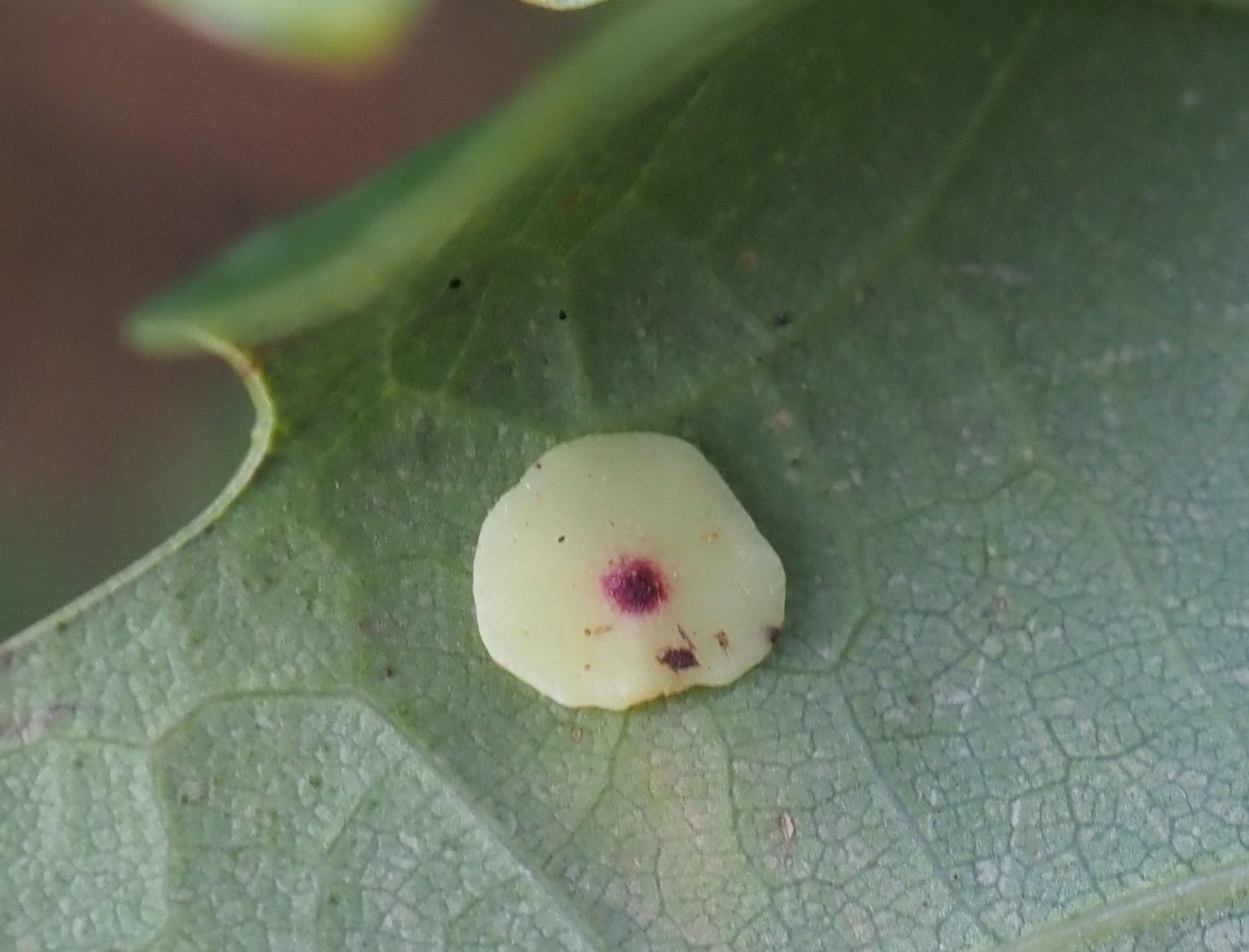
Neuroterus albipes f agamic Smooth Spangle Gall on oak Quercus sp. The f agamic means that the gall is formed by the laying of an egg by an unfertilised female insect. The insect injects hormones into the plant which cause it to grow abnormally, forming the gall, which the developing larva feeds on once it has hatched from the egg.
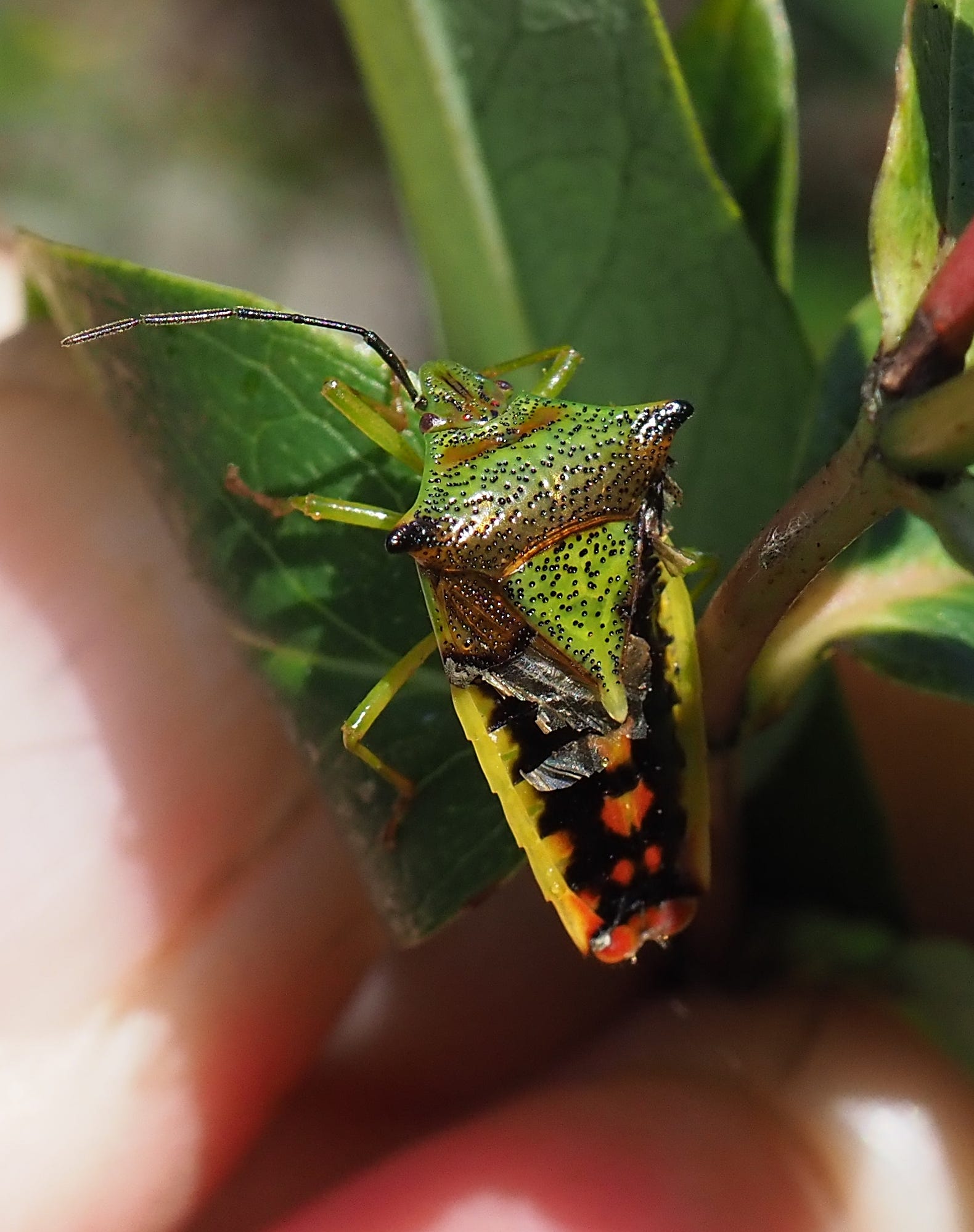
Of course I’ve found other, larger and more obvious insects as well, species that I am more familiar with. Today, by looking carefully in amongst leaves and branches I found Hawthorn Shieldbug Acanthosoma haemorrhoidale.
And as I walked along the front of the church, in amongst the old borders now becoming overwhelmed by less arranged and more natural vegetation a Hummingbird Hawk-moth powered by, pausing briefly to nectar at the Red Valerian, before disappearing high over the church and away.
I think I've managed to now clear out the Substack links and other paraphernalia.

2 comments:
I did not know about the problem with Substack, the only interaction I have with it is following a blogger in the States who writes about nature, her left wing politics and the poop of all living things. On the plus side, it's great to hear that you're forging ahead with urban wildlife, I have just started reading Urban Plants by Trevor Dines (and need to come up with a realistic excuse to get Graeme Lyons' PSL one!).
I too enjoy searching for urban wildlife, love the little aphid!
Post a Comment