Sunday, 10 May 2020

Garganey and Megarthrus prosseni

Friday was a day off, overcast but still. I wandered about looking for things and birding. I ran the moth traps, but only two as the battery wasn't charged for one, forgot to turn the charger on. Nothing much in the traps, a few intruders included six Nicrophorus humator and five Stenophylax pernistus. More in vague hope than any real expectation in the dull conditions I put three colour tray traps out.

Afternoon I wandered down the track to have another look at The Shunan, and amongst the drake Gadwall and Shovelers suddenly from nowhere appeared a drake Garganey. There have been two previous occurences of this neat wee duck on the patch in the past, 2nd May 2014 and 23rd May 2015, on both those occasions I saw the bird from the car on the way to work. This time I was on foot, I also scented the chance of a garden tick. The dog and I turned and hiked back up the hill. From the favoured bench the duck remained in view, nice. It was still present yesterday and by late yesterday afternoon had been joined by a friend.

Three Gadwall, a Shoveler and a drake Garganey.

Not much in those colour traps, a Helophorus sp in the orange one, a large one, so either aequalis or grandis. There's a trick with these, shove a piece of paper under the elytra and view the last abdominal segement from underneath the beetle. Even then a bit tricky to see but grandis has nice regular cog teeth at the end of the segement whilst on aequalis it's all a bit random.

Helophorus aequalis.

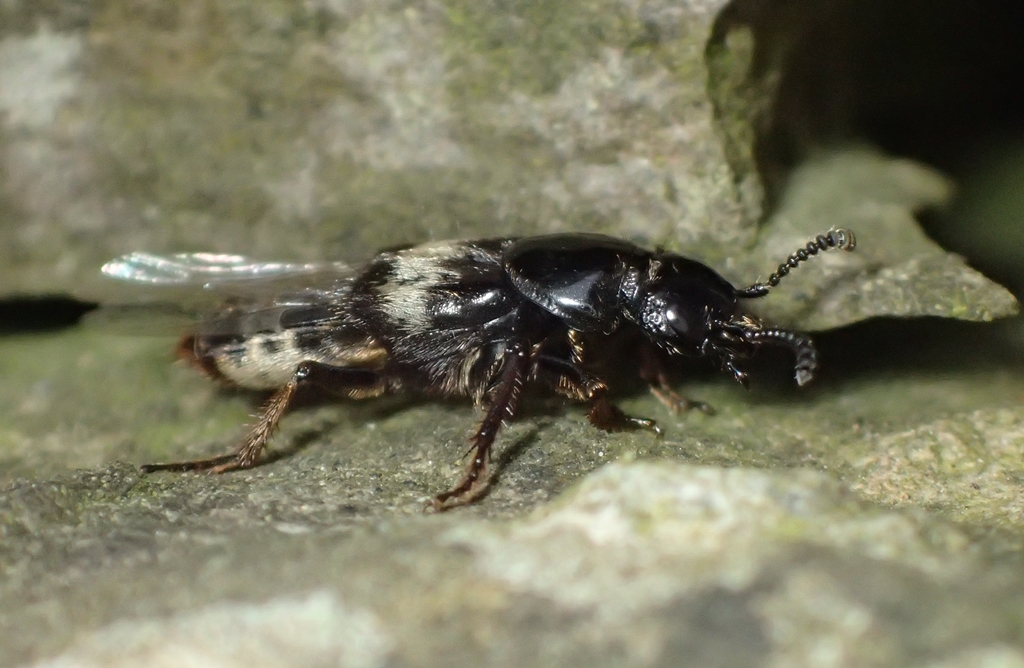
There was little else in the traps except a small Staphylinidae. On examination this proved to be Megarthrus prosseni, awaiting confirmation, thanks again to Mike Hackston for his fabulous online keys.

Not the best photo, on H. grandis the "teeth" would be much more obvious.

The Helophorus was quite a big thing, 6 - 7mm the other beetle was a tad smaller.


Megarthrus prosseni I reckon.

Quite distinctive with the incised corners to the pronotum. I recall catching one of this genus before but I'm not sure it was this one. Looks as if there might not be previous records of this species here, I have the specimen anyway.

On Thursday I checked the pitfall traps by the dead Rook. The Rook has been festering for a few weeks. I'd put the traps in around the Rook following an online recommendation for the plan.

Good call, 13 Thanatophilus rugosus plus assorted Staphs and a Cercyon melanocephalus, most released, just kept sample Staphs to ID, not sure what the big shiny one is, on the list to "do".

Subsequently, the traps have contributed a few more of everything plus a rather cross and smelly Nicrophorus humator.

Nicrophorus humator, on top of the actinic trap.

 Other trap intruders - Psychodidae - 90 odd species, tricky beggars best left alone, lots of these.

Stenophylax pernistus, strictly requires gen det but on distribution most likely this species.

Common Pug, new moth for the year on Friday night.

Anthrocoris nemorum, beaten from willow.

Expect a swarm sometime soon, when it warms up probably, Fever Fly, Dilophus febrilis.

For the first time I had my first Sedge Warbler of the year when it was snowing. Bit of snow today, it actually settled for a bit.

Meadow Pipit

Lesser Redpoll from kitchen window, three ringers locally have done 150 of these this year.


Brown Hare from the car today.


Monday, 27 April 2020

Moths and intruders

Finally the mothing has got interesting. Three traps out at the weekend and on Sunday the first interesting moth of the season, Red Chestnut which is new for the site.


Red Chestnut

Also an interesting selection of Clouded Drabs which have caused me some ID issues - 


All Clouded Drabs, that's a bit nuts, and why Noctuids sometimes annoy me...

A few intruders too. Madly I tried to identify a Bristletail. Should be ok, only a few UK species mmm, I need to post this on Intruders FB page, complete swines. I think this might be Petrobus maritimus, but equally it might not be.


Petrobus maritimus maybe.

In this game you need to know when to give up to preserve the sanity. When the maker of the new key suggests the 1954 RES key is a bit hard, and they've seemed to give up on their revised online key, and there are a pile of new species for the UK and not many pictures online at reliable sites it might be time to throw in the towel.

Likewise (not an intruder) but this Philonthus (I think) is proving a tad challenging. Two longish attempts have left me very uncertain. A better microscope is required.

Philonthus sp, if you want to put me out of my misery...

Found outside the village shop whilst queueing, they don't let very many of us in the Coop at a time so we wait outside and unfortunately I noticed this heading my way across the pavement. Unfortunately I had a sample tube in my pocket (it is rare that I don't have one to be fair). And now having killed the beast I feel duty bound to get to an ID, I may need to call up the online support shortly.


Tipula rufina, intruders.

I caught two of this quite smart Tipulid that I'm not sure I've IDed before, common enough though it is. Luckily I had a good idea of what it was before I started to key it, and the CR has confirmed it. It didn't take too long to do, and I let one of the two go.

The warmer weather brought quite a few things out, first hoverflies of the year, Plenty of Eristalis intricarius and a few Eristalis pertinax on the Marsh Marigold flowers down by The Shunan.

 A male Eristalis intricarius.

 A male Eristalis pertinax.

And I finally got to grips with the fish in the burn, one Brown Trout and a lot of Three-spined Stickleback, I need to try to confirm the stickleback, a netting session is required I think, there are plenty to be seen though.


Cercyon melanocephalus

A common thing if you delve about in poo, small though

Delving about in the dead Rook produced this,

Thanatophilus rugosus, a proper big beetle.

Oystercatcher, with a nest somewhere near.

Male Stonechat.

On the patch there were Ruff, Blackwit, possible Whimbrel, slightly unsure, brief call, first Swallow, House Martin and Sand Martin and a short distance off patch a Willow Warbler was a nice surprise.

There were a few Emperor Moths about, I dug out the pheromone lure, but forgot it when I walked to Bosquoy, however it had been in my coat pocket briefly and a male could sense that. Recorded three other adults and a pupa, over the weekend, one flyby, one attracted to the lure and one disturbed by the hound.

Star of the moorland walk though was finding an ant nest. ID can be tricky and they wouldn't stay still so I took a worker. They proved to be Myrmica ruginosa. I'm not sure I've seen an ant on Mainland before.

First segement of the antenna gently curved and the two spines long = Myrmica ruginosa.

 Gorse, with a coconut smell.

Primroses out in abundance.

Selfie, trying to ID stuff, new Butterfly Conservation T, pleasingly packaged with no plastic - yes it was (briefly) warm enough for a t-shirt on Saturday.

Monday, 20 April 2020

Green-winged Teal

It's a while since I found a half decent bird so a Green-winged Teal on Loch of Bosquoy was rewarding.

Green-winged Teal

The photo is at 100x digital enlargement so not the greatest. Also Bosquoy way were 18 Black-tailed Godwits and a few Ruff. All pretty good for a wander down the hill.

Also had a fair tramp up on the moor. Louise had seen nine Emperor Moths, all flutterin' flybys, I wasn't so lucky, but did find this empty pupal case.

Emperor Moth pupal case.

Very frustrating trying to identify Staphylinidae, they are quite hard, even when using the excellent Danish beetle, online key, Lott and Mike Hackston. In the end I went for a wander and found some beetles I could identify.

 Paranchus albipes.

Also down by the burn I found Bembidion bruxellense again, pretty impossible to photograph without murdering, so I put it back. I also found some interesting things at the field edge, 

 Clivinia fossor.

Leistus fulvibarbis.

There were a couple of Pterostichus strenuus with them as well.

A moth trap intruder, Cepeae hortensis.

I've also had Cornu aspersum in a trap a couple of times but not much interest in there really, it's been too cold.

Common Quaker.

Just Hebrew Character and Clouded Drab otherwise. The new LED / Synergetic combo with the Robinson seems to work well though.

 Mute Swan in the evening down at The Shunan.


Tuesday, 14 April 2020

Lockdown days

I am on holiday and I like being at home on holiday, I often feel I don't spend nearly enough time at home. However, it would be better if it wasn't these circumstances. I am more and more shocked by the brassneck of the government, "There is PPE." vs the reality in the health service, at least in some locations across the UK, "There's very little PPE." It also struck me as deeply cynical to ask retired NHS staff to return to the service when statistically these folk, 60 years + are really quite vulnerable. Of course many of those people will "answer the call" because that's why they did the job in the first place, and of course, due to lack of PPE, due to repeated infection, a significant proportion of these volunteers will die. There's all sorts of other aspects of this situation which concerns me but I guess we will see how it pans out, of course some people won't be around to see how it pans out.


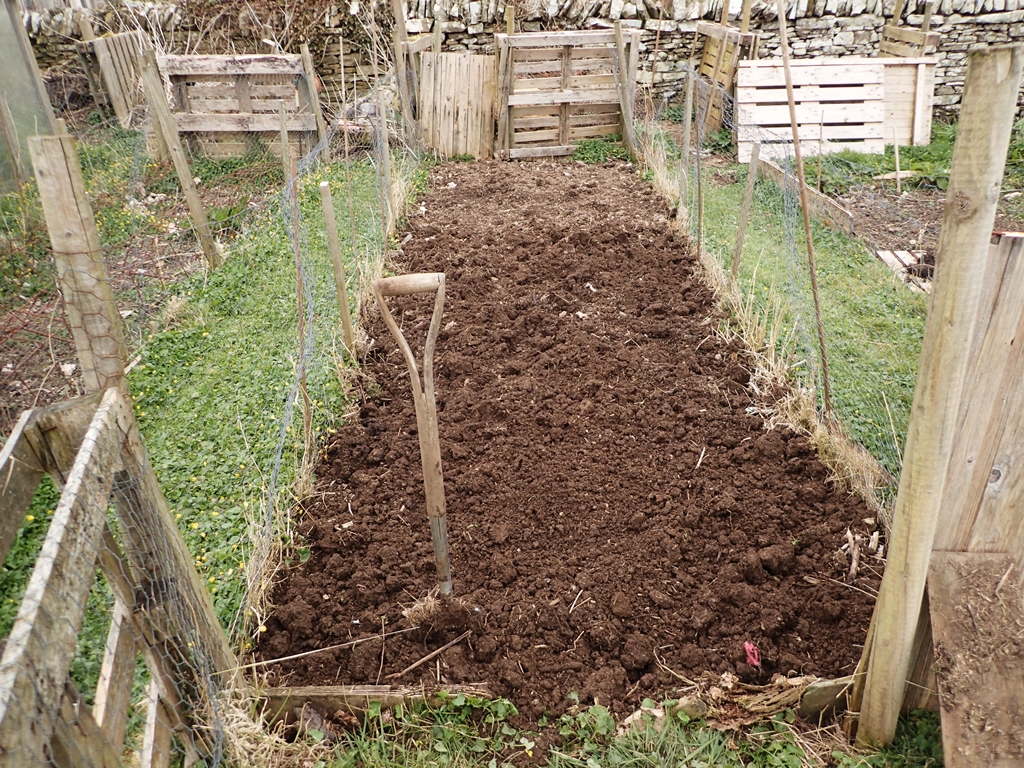
The bed I finished digging over today. We'd covered it in cardboard so it shouldn't have been too bad, these are the roots I took out of it. It was bad.

I also had a go at identifying some beetles today. The first came out as family Leiodidae; time to give up on that then, 90 odd species mostly done on male genitalia. The second one was a Staphylinidae and I seemed to be going along ok, got to Bledius and then asked for help before attempting to go further. Good job I did, actually Aleocharinae a fiendishly difficult sub family.

5mm long Aleocharinae, Geostiba circellaris was suggested as a guess, I've tried to follow that up but haven't got very far other than geographically it's feasible. I should really just give up, these are very, very difficult.
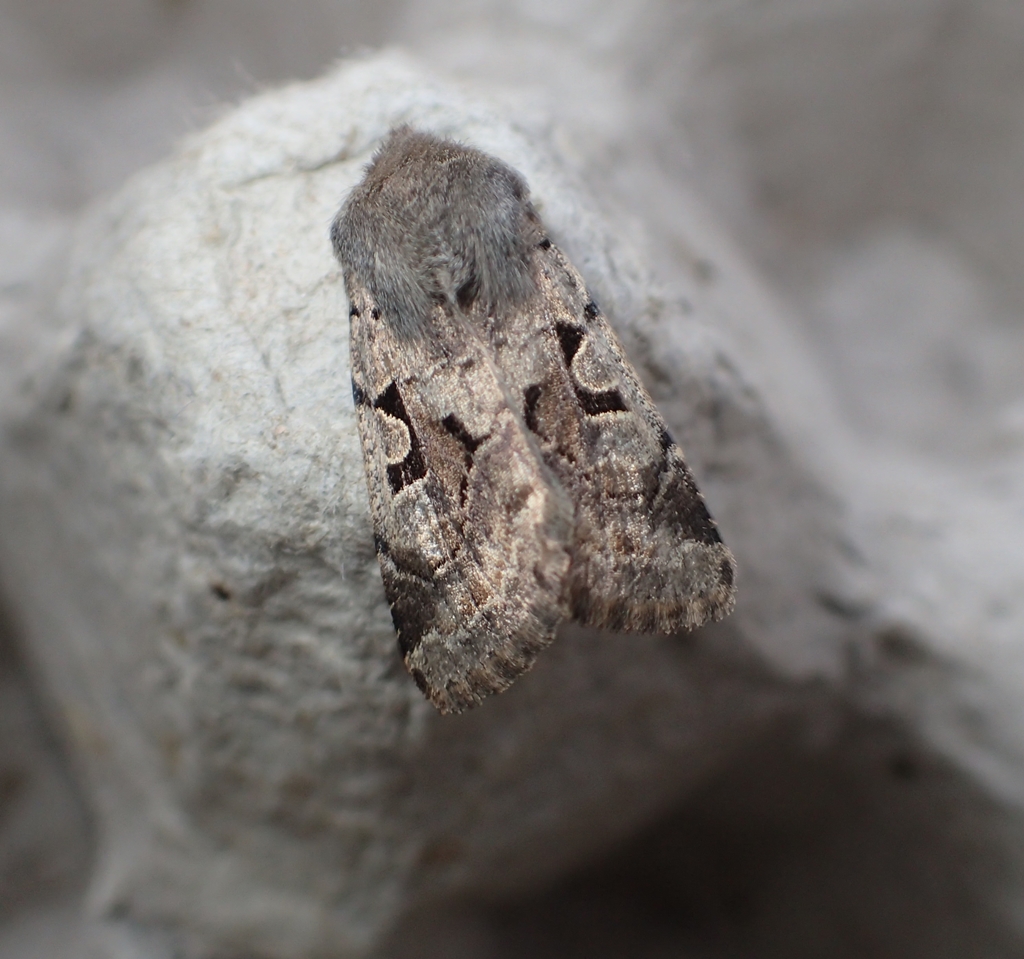


This is Creophilus maxillosus, a large Staphy.

I'd not seen one of these before and had trouble identifying it as I rescued it from a puddle and the pale hairs couldn't be seen as it was damp. I then kept it in a damp tube.... Only when it dried out did it become obvious what it was but by then I'd already got expert help.


Coltsfoot and Butterbur were found at the same location, a walk with the dog after we'd gone to fetch the bread we'd ordered.

 Clouded Drab

Hebrew Character

Moth trapping produced Hebrew Character, Clouded Drab and more Common Quakers.


Barynotus moerens

A nice big, relatively easy to identify weevil. Usually associated with Dog's Mercury which is rare here. I've found this species in the garden before.

On the bird front, the first Bonxie, the first Blackwits, it's bloody cold but perhaps spring is here.

Tuesday, 7 April 2020

Mammal day

Yesterday, was the forebringer, a Pygmy Shrew was sadly in one of the garage snap traps. This has occurred before oddly, no way should they be wandering around in the house.

Today started well as I went to feed and muck out Blue, our pony, first thing (ish) and came across a female Otter with two kits feeding in the loch. I've seen plenty of Otter signs this year but this was the first time I've seen the beasts themselves.

On the way home a Brown Hare ran up the road just in front of the car and then paused momentarily as it turned in to the field, over the stone dyke, under the barbed wire, and away, but no photo.

On our walk with the hound a Rabbit posed nicely.


Then later, wandering around in the garden something caught my eye. I stood still, got the camera from the bag and waited. Sure enough out popped an inquisitive and unaware Orkney Vole.


Orkney Vole

Absolutely an ambition species to photograph, it has only taken me the best part of eleven years. We do occasionally see them in the walled, flower garden right by the house and this one had a tunnel running along the base of the outer edge of the wall A bit of luck, and I had the camera to hand.

Messing about in the gutter

Gutter is the word used here in Orkney for muck and grime, something can be guttery. I'm getting involved in the gutter in my quest to find more and different creatures in our garden and nearby. Searching in the litter under the sage bush revealed a smart wee beetle. But although the rear abdominal segements were exposed I wasn't sure this was a Staphylinid. Unwin's FSC key was consulted and that took me that far. Next, it was Mike Hackston's online key to genera (Mike's keys are really excellent if you've not experienced them). That took me to subfamily Omaliinae and a bit of a full stop. However, if in doubt head over to Mark Telfer's website, my next destination. Unfortunately, the news there was not initially very encouraging, Mark refering to C.E. Tottenham's 1954 RES  key as "the most accursed key in the British beetle literature!" Mike Hackston to the rescue again, as Mike had posted to Mark's site that he had translated a German key and adapted it with other references and thought it might be helpful (for some reason I had failed to find this key earlier). This key was reasonably plain sailing, one tricky couplet, and took me, hopefully, to genus Anthobium, a genus with just two UK species. Unfortunately, Mike's key doesn't separate these two. C.E. Tottenham does though and these old RES keys are freely downloadable. A. unicolor, and a look at our local database showed one record (slightly disappointing as I had hoped I might have a county first).


Anthobium unicolor.

 Sage litter and gutter, up close. Note the very small critter hiding in the photo, identity revealed later.

The site.

(Post incomplete, more to come later.)