Friday, 4 February 2022

Biological phenomenon!

We went to Evie beach on Wednesday (02/02/2022) good decision. An extraordinary spectacle met us, billions, maybe trillions of flies emerging on and around the beach. There were a number of species involved, but the kelp fly Coelopa frigida was the most obvious.


It was hard to photgraph them and give the sense of numbers. We could easily hear them as we walked along, the flapping 2x trillions of wings. It was like rain hitting our clothing, we keep our mouths closed tight!

Huge numbers of birds were feeding on them.

And looking closely on the shore pupal cases and, under turned stones, many larvae.


Pupae above, larvae below, probably of Coelopa frigida.

A look closer.


The close up shoes the bare side to the thorax which thus keys to the species pair C. frigida and C pilipes, technically, "anepisternum bare or with short bristles only towards the lower rear part. I identified these as frigida due to the lack of setae on the ventral surface of the subcosta of the wing. But I think, C. pilipes, which I've not seen, is covered in fine hairs all over its legs, so it looks kind of shaggy.

I didn't take specimens of the smaller Dips, probably a mistake, but I'm trying not to overwhelm myself at the moment. Louise did catch a large Dip which I brought home, and am still trying to figure out. There were a few of these about, on the car and on track puddles.


This can't be C. pilipes as the anepisternum is hairy and has strong setae, but I'm struggling with the Unwin key at the moment. It is Scathophaga calida, which is not all that common so good result, thanks TI.

Amongst the birds was a nice 2cy Iceland Gull.


Iceland Gull, 2cy.

There were plenty of the commoner gulls and lots of small waders as well as 100s of Starlings, Rooks and Jackdaws. 


About 300 Turnstone and 200 Purps as well as Redshank, Dunlin, Ringed Plover, Sanderling.

Even the Snow Buntings joined in descending onto the kelp to feed at one point.


Snow Buntings.

Also washed up with the tons of kelp were the bryazoans Square-ended Hornwrack and Sea Mat. I found the egg case of dogfish and Flapper Skate.

Dipturius intermedius, Flapper Skate, egg case.

Sea Mat, Membranipora membranacea, a bryozoan, on kelp.

Small Spotted Cat-shark, Scyliorhinus canicula, egg case.

Square-ended Hornwrack, Securiflustra securifrons, a bryazoan.

The worm, Spirorbis spirorbis, on kelp.

I was a bit disappointed that the hornwrack sample I took was the less common (?) Square-ended as I haven't previously recorded the common HornWrack and I bet it was there amongst the kelp.

Before we left, a check on the car park beach found quite a few of this common shoreline Collembola, which by a bit of luck, especially as it was 2mm long, I managed to get a half decent image of.

Anurida maritima.

An extraordinary spectacle which, I've now learned, was repeated on a number of beaches and islands across the county. It would be interesting to pull together where on Orkney this did and did not occur, if it occurred south of Orkney or in Shetland on the same day. I'm guessing the trigger was the huge quantity of kelp deposited on the beaches recently and the relatively calm, warmish (certainly ish) day.



Wednesday, 2 February 2022

Flies, bryophytes, collembola.

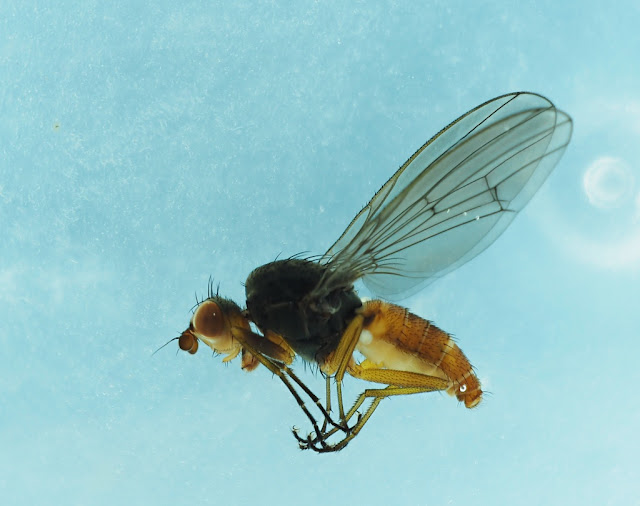
So I caught a couple of flies in the lean-to greenhouse/conservatory. I took some photos and then I asked online after a bit of a guess at the ID. Very kindly IA responded about one of them and even more kindly, sent me a key.

Several hours later, having downloaded and printed the key and Dipterists Forum Dip morphology guide, faffed about with the thing, trying to understand all the terms, some of which have alternate terms.... I cheated and scanned the web for images. And then keyed in reverse, but I was unsure. Maybe the image I was using wasn't correctly named, or maybe I just didn't understand the wing venation couplet in the key? Anyway, I posted a possible ID online, and happily wasn't a million miles away but anyway IA named it for me and told me what to check.

Tephrochlamys rufiventris (thanks IA). 

One of the crucial identification features, the thing that gets it to species is this tiny spine on the ventral face of the mid femur. Easy enough to see with the new microscope.

You can just see the one bristle amongst all the setae on the ventral surface of the femur.

The other fly is in a family that is way beyond my abilities so I'll just forget that one.

Anthomyiid, female, I'm informed, thanks TI.

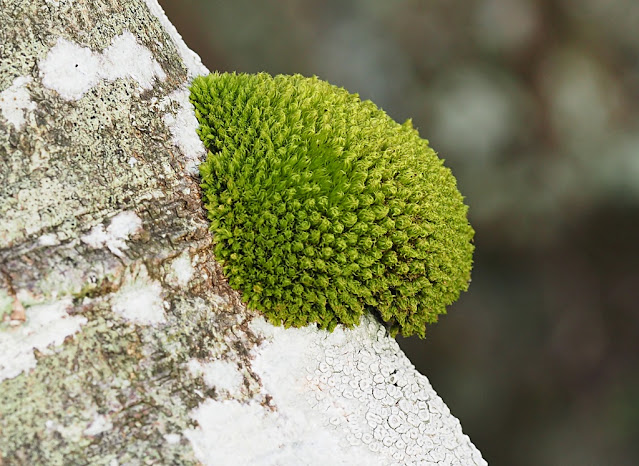
I've had a bit more success with Bryophytes. One species that has bugged me for several years is the moss that grows on a lot of the mature trees here. It grows along the branches in clumps and my previous attempts to ID it have failed. Howver, new book in hand, specimens under the microscope and eventually I got it sorted.

Ulota phyllantha, or Frizzled Pincushion.

Close up showing the gemmae which seal the deal.

When we were out at Skaill the other day there was an interesting looking moss in a burn bed. The burn was dry, I grabbed a sample. Initially I thought this was Greater Water-moss.

But BH put me right, it's Cinclidotus fontinaloides, Smaller Lattice-moss.

A bit wet and shiny but shows the thickened leaf edges and the nerve fairly well.

I took more samples today and found a couple of liverworts, Lunularia cruciata, Crescent-cup Liverwort, I need to redo the pix as they're rubbish. But the field photo with the TG4 was ok.


Lunularia cruciata, Crescent-cup Liverwort.
  

A bit rubbish of Metzgeria furcata though. There's some moss tangled up in that too.

Metzgeria furcata, Forked Veilwort.

 I also found this moss in the stubble field which is I think Raconitrum ericoides, fingers crossed.


Raconitrum ericoides I think, Dense Fringe-moss.

One of the things about taking these moss samples is that there are lots of small inverts running about in them, they come to light under the microscope. Photographing them is not easy. Today there were a couple of staphys, Aleochines, so after a quick look I chose to ignore them, a lot of mites, and more interestingly, and feasible, a few Collembola. Most of these were uncooperative but I suspected Vertagopus cinereus and identified the easy Orchesella cincta, I managed a rubbish photo of that.

Orchesella cincta.

In the sample of moss, Racomitrum ericoides, from the stubble field there was a more photogenic Collembola, well it stayed still anyway. It was from the Isotomurus genus which is tricky, but I'm maybe suspecting I. pseudopalustris due to the habo, we'll see.

Isotomurus maybe pseudopalustris.

This was taken using the TG4 with microscope mode, manual focus and focus bracketing down the eyepiece of the microscope, it's turned out pretty well. The Collembola is about 2mm long.

 So a bit of success here, a few new things, the two liverworts at least and I think three mosses and the fly. I'd better wait to see if I can claim one or two new Collembola, I've had O. cincta in the past. I've got some more samples and photos awaiting attention.

Much of the rest of this very windy day was spent decorating the downstairs bathroom, eating the lime and lemon marmalade cake I made, and making stuffed peppers for tea.

On the bird front not much today, four Greenfinches, but there were 13 Goldfinch, 2 Brambling, 9 Chaffinch yesterday as well as Sproghawk, Hen Harrier and the usual quakers. The Woodpigeon flock is at about 20 unusually for the time of year. And I did photograph the Marsh Marigold, happily in flower on 29th January, that's a bit mad.


Tuesday, 25 January 2022

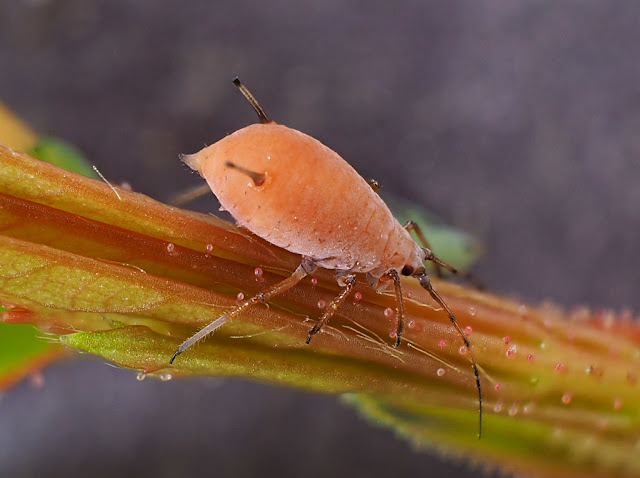
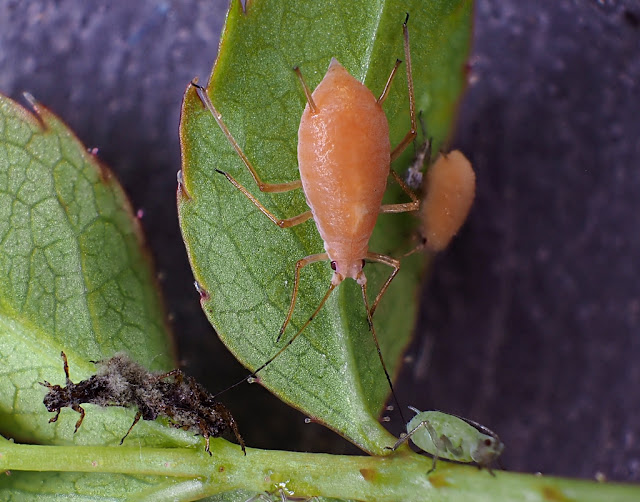
Macrosiphum aphids, the 365 challenge and some books.


Macrosiphum rosae, Rose Aphid (or maybe not). Macrosiphum euphorbia (thanks RD).

I'm having a few doubts about this ID now and wondering if these are just M. euphorbia, the Potato Aphid which I think I've found on the roses in the conservatory previously. These Macrosiphum aphids are a bit confusing. These don't quite fit with the images on influentialpoints. It could be that there is more than one species here, a not uncommon issue with aphids. Anyway added in the 365 challenge but I might have to edit again. 

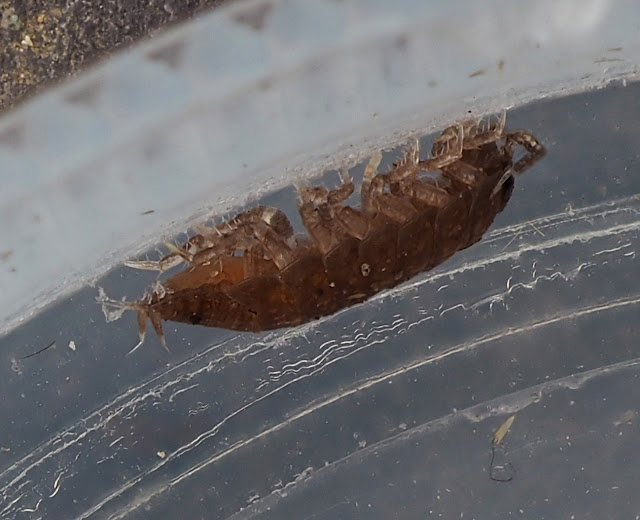
I finally nailed this woodlouse, the commonest apparently but getting the ID to species is a little tricky. The microscope proved three ocelli.


Trichoniscus pusillus.

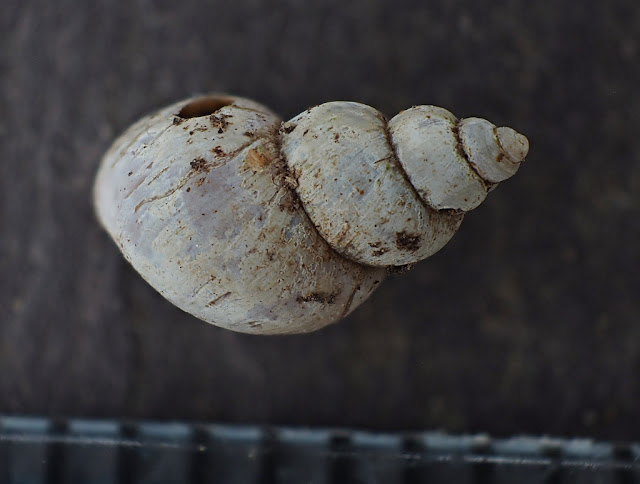
This old and damaged shell found in the Wee Wood is from an aquatic mollusc, but it does also venture on to land. I was looking under stones and in the humus layer for slugs etc. 

Galba truncatula.


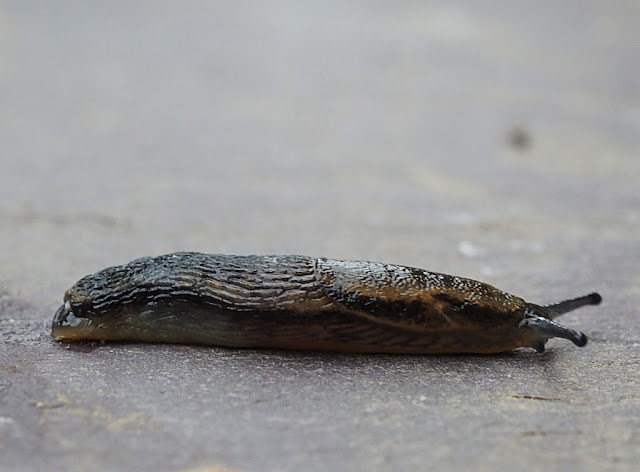
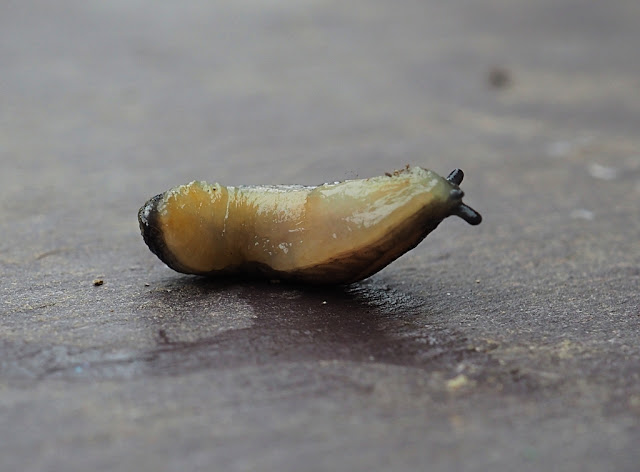
Arion distinctus.

I originally identified this as intermedius, kindly corrected by CduF.

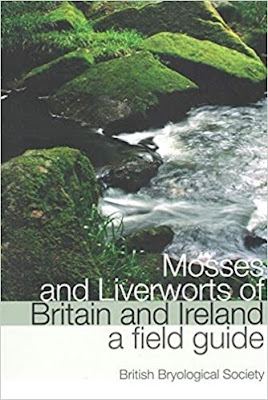
I've been having a look at a few mosses again and borrowed the British Bryological Society book from the library. It is a very nice book which I shall purchase shortly, it's available from the society itself.

£30 from the society, well worth getting.
 

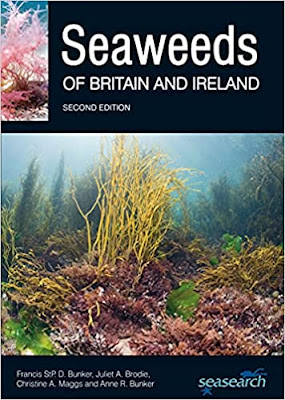
I've recently purchased the Seaweeds of Britain and Ireland, it's a Seasearch publication, their other books look interesting if I get more into the marine thing.

Well worth £15.
 

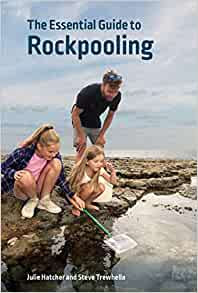
I wasn't so impressed with the Collins Coastal Wildlife field guide, but Louise liked it. I'm preferring the Hatcher and Trewhella Rockpooling as my seashore ID anything and everything book.

Good value at a tenner or so.

Shelduck wars have broken out onThe Shunan with another drake appearing. The drake of the newly resident pair defending the territory robustly, weirdly aided by a Great Black-backed Gull. Red-breasted Merganser was added to the year list for the patch. And Hen Harriers have been very apparent, a male seen a couple of times this morning, I think the same one, a ringtail in the garden this afternoon. This after four ringtail sightings on Saturday. A male Sparrowhawk tried a neat attack on the front feeders today popping over the kitchen roof, but the spuggies were safe in their honeysuckle tangle.
Not counting the aphid, I'm on 27 new species since 24/12/2021.

Friday, 21 January 2022

Raptors, rain, squally.

 Not keen to venture out this morning but the hound required walking. A two coats morning for sure. To make matters worse Louise had taken the car down to the pony and I'd left the Kowas in it. The Nikons required a bit of a clean, but they're still a functional pair of bins, I didn't bother with a camera. 

Woodpigeons clattered out of the trees. Then minutes later a male Sparrowhawk.

The Curlews across at Loch of Bosquoy were bothered and after a minute or so I located the botherator, a Peregrine which was trying hard to seperate one off the flocks. A couple of times it forced a bird out but, from what I could see, without making a successful kill. 40 odd Golden Plover whooshed past me in the field, also panicked by the raptor. 

I wandered back up the hill, stopping at the Wee Wood to collect a bag of litter for extraction. The last attempt had not been successful, producing just a couple of mites and a Linyphiidae which I wasn't going to attempt to ID. I went for the ditch this time, leaf litter and scraped a bit of soil in to the bag as well.

Up the hill, looking at the house, mass panic from the feral pig's, everything flying around, but something is quicker, sharper, scorching round the trees, and I just get enough of a glimpse of the female Merlin before she's behind the house and off. So a few more species for the year. Expected but nonetheless good ones. 

I've not seen Shortie yet this year, but Louise had one yesterday, caught in headlight glare at the bottom of our road.

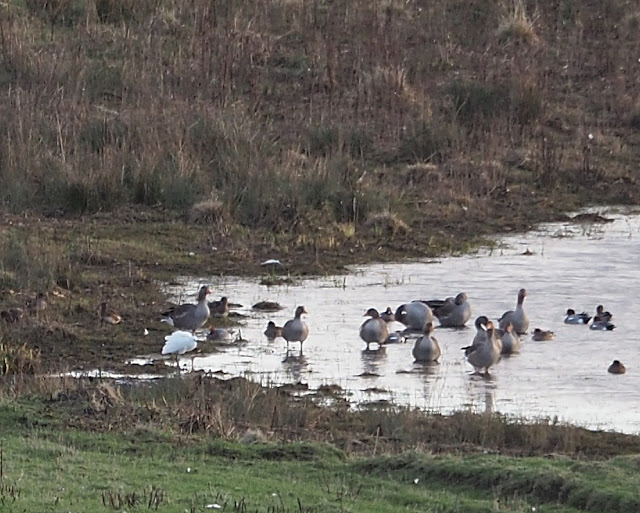
Yesterday I did my WeBS, the forecast is not great for the weekend. It sometimes feels like a bit of a chore but in decent weather yesterday it was entertaining enough.

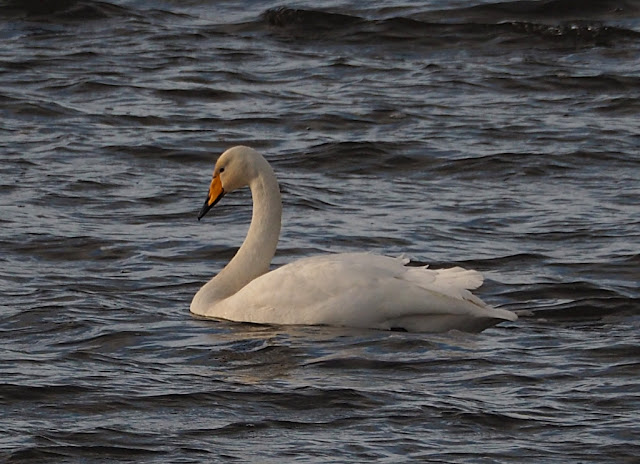
Counting Bosquoy some Whoopers sailed close. An early Oystercatcher was of note.

I moved on to Loch of Sabiston, more of interest with a pair of Pintail. Another lone Oystercatcher. And then, as I was about to leave, a Little Egret flew across the loch and landed on the near shore.

An astonishingly excellent photo of Little Egret. Loch of Sabiston is a bit of a hotspot for this species, but it's a while since I saw one there. What is required is one on The Shunan, or at least on Bosquoy.

More visits to the Brough of Birsay causeway have produced more species for the one new species a day project.

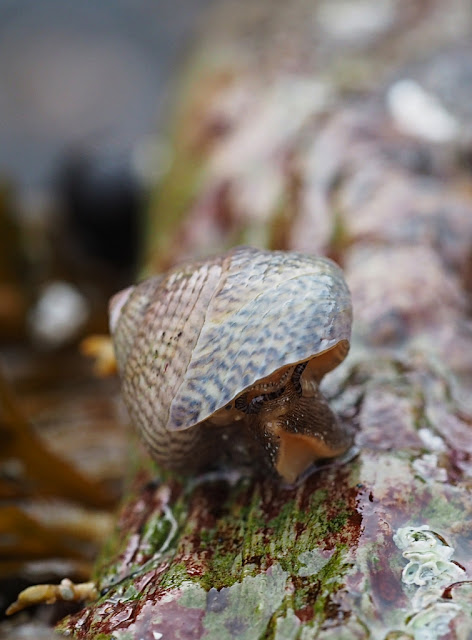
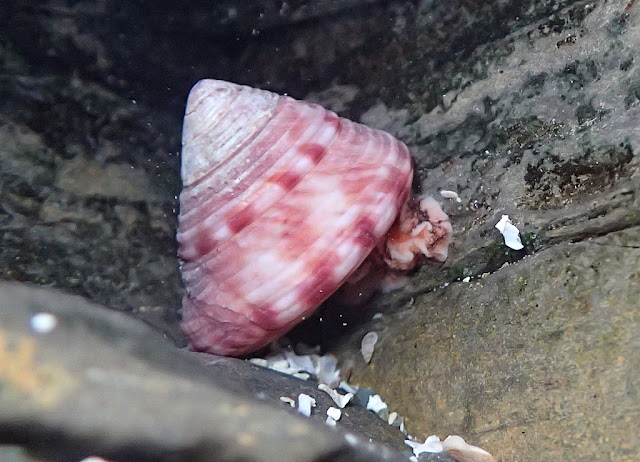
It was particularly nice to find live animals of Grey and Painted Top Shells, not ticks but good finds.

Grey Top Shell, Steromphala cineraria.

Painted Top Shell, Calliostoma zizyphinum.

The new things were all seaweeds, or lichens.

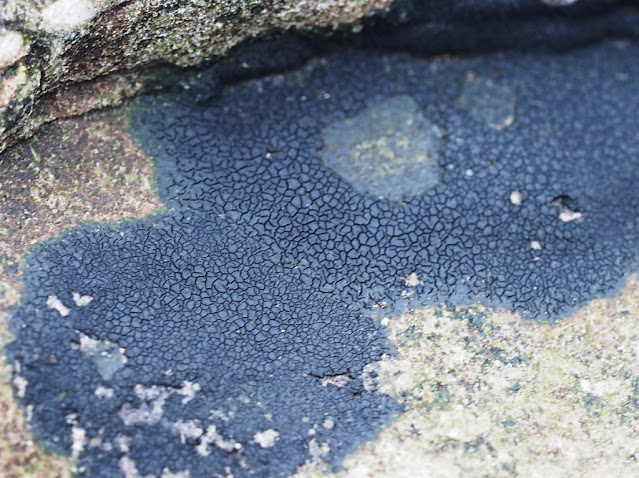
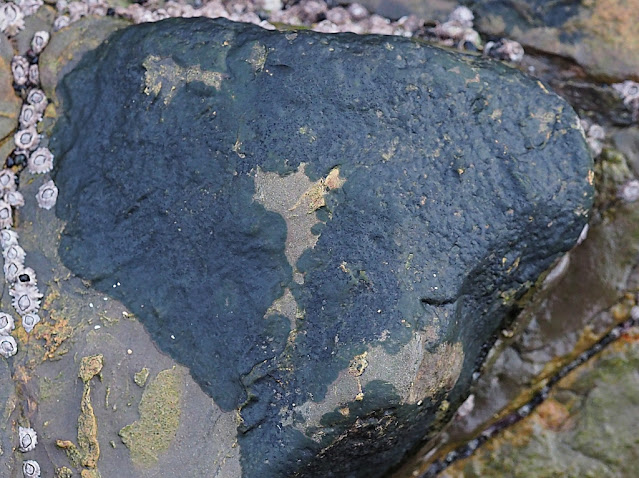
I've allowed myself the two lichens because in the past I've confused them and beeen unclear between them. I'm not sure I realised there were two species. I think in the past they were both Verrucaria species but the taxonomists have been playing.

Hydropunctaria(Verrucaria) maura.

Verrucaria mucosa.

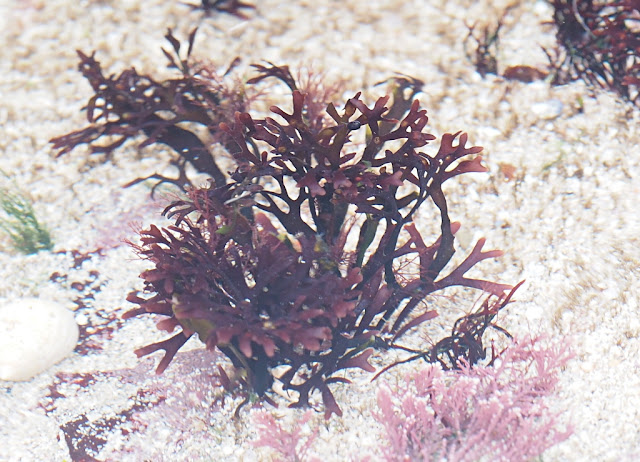
Then a few new seaweeds.

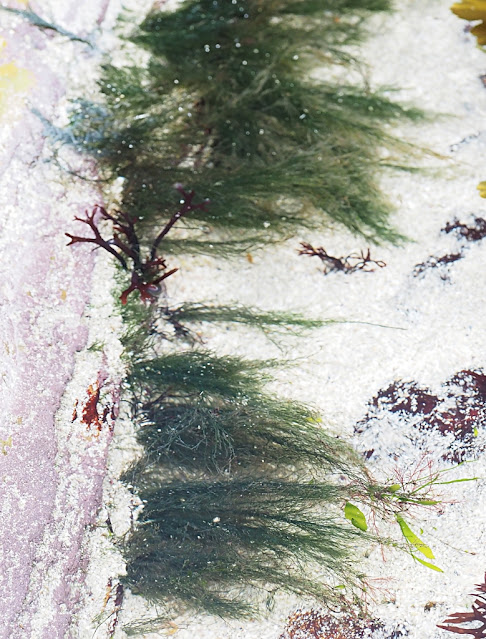
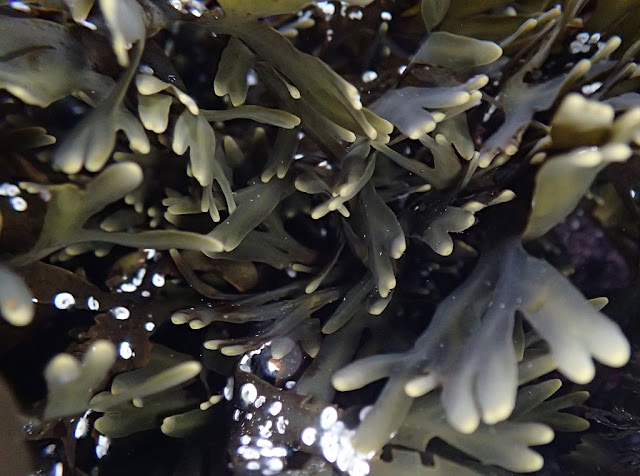
Chondrus crispus, Irish Moss.

Cladophora rupestris, probably.

I think I need to do some microscopy to prove the Cladophora, so I can't have that, yet. However, the good news is that last week's Corallina officinalis seems to be ok.

Dichyota dichotoma, Forkweed.

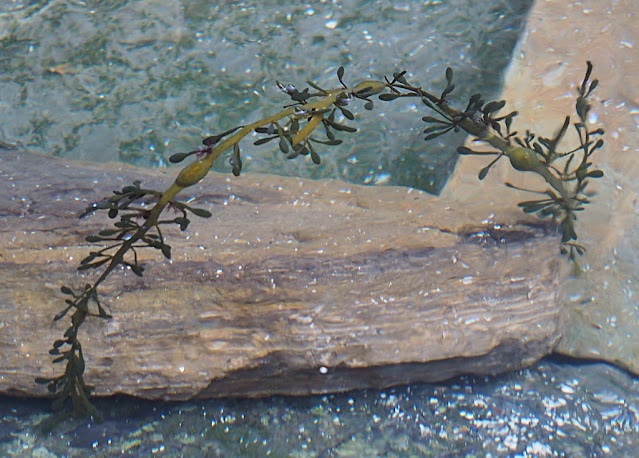
Ascophyllum nodosum, Egg Wrack, I think.

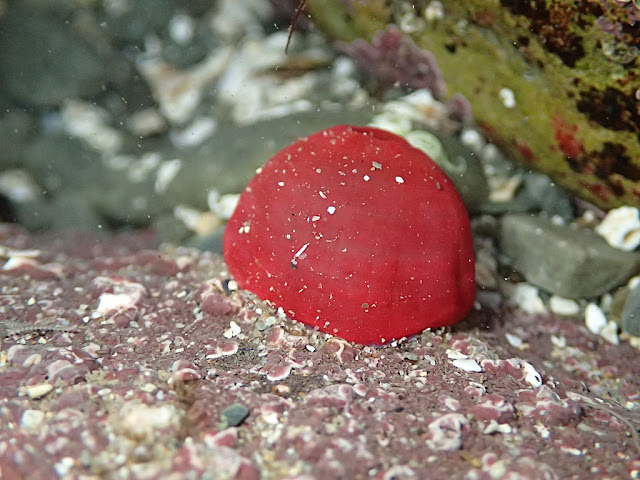
Not really sure about this one. And I was hopeful that this anenome was something different but I think it is just Beaded.

Beaded Anenome.

So, I've properly recorded two molluscs which I'd already counted, a couple of new seaweeds plus the Coral Weed, and two lichens. Five more species.

New species from Xmas Eve, 24.